Pop Music

The Chainsmokers Problem

First Variant:

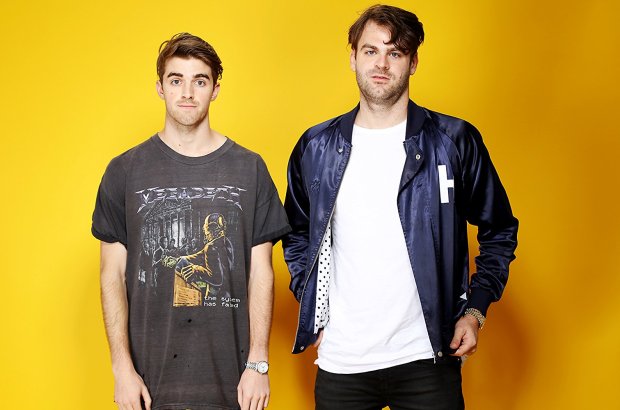
Alex Pall and Andrew Taggart of the Chainsmokers have a public image problem. To put it concisely: people fucking hate them.

This has little to do with their music, which tends towards the EDM-influenced pop that’s been in vogue since roughly 2011 (thanks for nothing, Calvin Harris), and features lyrics about romantic frustration, self-destructive behavior and an unhealthy obsession with youth. Pretty standard fare for a 21st-century pop performer; hell, pretty standard fare for the entire space of music history. There are lots of reasons to dislike the Chainsmokers’ music, none of them particularly interesting or unique. But they, as people, are disliked primarily for two reasons: their 2014 breakout single “#selfie” and this 2015 interview with Billboard Magazine.

“#selfie” is indefensible. It’s an empty-headed dance-club number featuring a painfully unfunny monologue delivered in the exaggerated cadence of an obnoxious young woman. The central joke — that the act of taking a selfie is symptomatic of vapidity, cluelessness, and all other sorts of negative things that society associates with modern femininity — is so played-out and untrue that it barely warrants discussion. Suffice to say, “#selfie” is a song written by the kind of guys who will claim “satire” in defense of any poorly-received joke, without understanding that satire requires clear intent, an acceptable target, and, most importantly, some element of humor.

It could be argued that “#selfie” is such a terrible song that nothing the Chainsmokers will ever do could possibly make up for it; that it will cast a shadow over their entire career. That’s probably a little harsh for a song that was clearly intended as a cheap, one-off goof, (one that the Chainsmokers themselves have all but disowned) but the song’s uniquely irritating nature and its importance to the group’s career makes it hard to ignore. But it’d be even harder to ignore if the Chainsmokers hadn’t changed direction almost immediately after it was released.

After releasing a few non-starter singles, the duo returned in earnest 18 months after “#selfie” with “Roses,” “Don’t Let Me Down” and “Closer,” three songs of varying quality that nonetheless fulfill the qualification of being actual music, a title “#selfie” never quite attained. Their former musical identity as a couple of obnoxious idiots might have been forgotten if not for their disastrous cover story from the September 2016 issue of Billboard Magazine. The story itself includes many upsettingly indelible details, such as the clarification that the duo’s penises measure a combined 17.34 inches “tip to tip” (a turn of phrase that probably deserves an entire essay of its own), the revelation that Taggart started an investment club at his high school, a probably-apocryphal anecdote about the two of them punching each other’s faces until they drew blood while on the way home from a strip club, and, most famously, Pall’s declaration that “even before success, pussy was number one,” a statement which ranks with John Lennon’s “bigger than Jesus” remark on the list of poorly-thought boasts that almost derailed careers.

The Chainsmokers did not come off well, to say the least. Aside from the vague sexism and unconvincing boastfulness, the story is brimming with unearned confidence so extreme that it played as comedy originally but might seem like a minor tragedy in hindsight, depending on how the arc of the group’s career plays out in the future. For casual listeners, their impression of Taggart and Pall as people will be forever defined by this interview. And, to their credit, the duo seems aware of that. Just six months later, NME ran a feature about the Chainsmokers with the hilariously unconvincing headline “I Promise You, We’re Not Assholes.”

In the article (and the awkward, stutter-filled video that accompanies it), Taggart and Pall seem legitimately concerned about how they came off in the Billboard story. Pall goes out of his way to be diplomatic when speaking to the reporter, and Taggart even drops a halfway-charming line about his obsession with multiband compression. But as damage control, it’s largely unsuccessful — “we were joking” is rarely a convincing defense, and no  heartwarming anecdote about a sick fan can withstand the gruesome power of a statement like “pussy is number one”. But at this point, I don’t know if there exists a pressure-washer strong enough to erase the stain of the Chainsmokers public persona. They could perform a duet with the newly-resurrected Jesus Christ and in the back of my mind I’d still probably be thinking about their penises.

The problem with the Chainsmokers is that you can’t trust a first impression, but you’ll never be able to forget it.

Second Variant:

The weirdest thing about the Chainsmokers’ public image, and perhaps the central contradiction of their existence, is how little it matches their music. The Chainsmokers songs that feature other vocalists are largely interchangeable (“Something Just Like This” mostly just sounds like a Coldplay song and “Don’t Let Me Down” sounds like a Daya song — which is to say, nothing), but the songs where Taggart sings all hold to a single unifying aesthetic. That aesthetic isn’t entirely disconnected from the group’s frat-boy persona, but it’s got almost nothing to do with getting drunk and chasing girls. Okay, actually, it’s got everything to do with getting drunk and chasing girls, but in a doomed, romantic sort of way.

Take, for example, the song “Bloodstream” off of the band’s debut album Memories… Do Not Open, which opens with the lyric “I’ve been drunk three times this week/spent all my money on a fleeting moment,” accompanied by a minor-key piano line that replicates with unnerving accuracy the feeling of accidentally slipping into a week-long bender, the casual kind of self-destructive streak that no one around you notices, because you’re never drinking with the same people two nights in a row. I have no way of proving this, but I’m fairly certain that when the narrator says “I’ve been drunk three times this week,” it’s not even the weekend. It might not even be Wednesday.

The chorus follows a similar track: “I’m fucked up, I’m faded/I’m so complicated/Those things that I said, they were so overrated,” Taggart sings, followed by a drop that does little to dispel the gloomy attitude hanging over the song. Look, these are not fantastic lyrics: they’re simple and more than a little too self-serious. But they paint a picture of a specific situation that the listener can personally relate to. It’s obvious that Taggart (and his co-writers) took this song seriously. This isn’t a follow-up to “#selfie”, dashed off in a few minutes as an easy cash-in. This is a man baring his soul. This is a man who drinks too much, and that’s an issue — and maybe, just maybe, it’s not okay.

And yet, I cannot hear this song without being extremely, constantly aware that Andrew Taggart of The Chainsmokers is the one singing it. And regardless of how accurate it is, when I think of Andrew Taggart, I think of a hard-drinking, hard-living EDM party-bro who got famous off a novelty song so misogynistic that it actually makes me feel sympathetic toward its fictional object of ridicule.

And yet! Here is that same unlikeable person baring his soul to me in a way that I can’t help but find endearing, catchy and, yes, a little relatable — the three hallmarks of a truly good pop song.

Listening to this music, I find myself continuously torn between two distinct but equally distracting beliefs. As a result of their obnoxious public image, every bit of genuine emotion that appears in a song by the Chainsmokers seems either a) cynically fabricated and absolutely false in a way that is extreme even for pop music, or b) surprisingly meaningful in a way that is grossly out of proportion to the actual quality of their music, making it difficult to assess the appropriate response.

The problem with the Chainsmokers is that you can’t trust anything someone says after they’ve been paid to say it.


Third Variant:

Thought experiment: picture a Black Sabbath fan. Setting doesn’t matter. Don’t worry about time period, location, anything like that. Just imagine the type of person that would identify as a fan of the classic heavy metal band Black Sabbath.

Easy, right? If I asked you to describe this person, you could probably tell me about the way they dressed and they way they wore their hair. You could even tell me what their personality was like. They might be based on a person you’ve actually met, or they might be a composite based on board stereotypes, but still, the picture is there.

On the other end of the spectrum, picture a Justin Bieber fan. Wait, too easy. Picture an Ed Sheeran fan. You might not be one, and you might not even know one, but based on the type of music he produces and the image he’s cultivated, you probably know what that fan would be like. When you picture an Ed Sheeran concert, it’s not hard to imagine the crowd. Even if it’s tough to describe how they spoke or how they dressed, I bet you could make an educated guess about their race, gender, and amount of disposable income.

You probably know where this is going by now, but let’s go through with it, anyway: try to imagine what a Chainsmokers super-fan would look like. Try to imagine anything about them, anything at all.

Maybe, based on your preconceived notion of who the Chainsmokers are as people, you imagine their fans to be a bunch of brainless fraternity members, the kind of people who study finance during the week and then throw questionable parties on the weekend. Except the Chainsmokers don’t make “party music” — you can dance to it, sure, but it’s not the kind of music that your typical finance bro would reach for, except for the three months during 2014 where they all thought “#selfie” was hilarious.

Okay, so maybe it’s not kegger music, but it still appeals to the EDM set, right? Maybe that’s who you’re picturing: a fist-pumping MDMA enthusiast who goes to week-long parties in the Arizonan desert. A club kid, dancing around with a pair of glow-sticks in their hands, possibly wearing some sort of ridiculous outfit. Except the Chainsmokers are basically ignored by serious fans of the EDM genre, and not without reason: the music they make now is closer to top 40 hit than it is to rave anthem. You’ll still hear the Chainsmokers in nightclubs, but not in those kinds of nightclubs.

By now, with your collection of stereotypes exhausted, you might try to picture a casual Chainsmokers fan, just a single person whose life is, in any small way, defined by their enjoyment of the Chainsmokers. But even that is basically impossible, and it’s impossible for one reason: the Chainsmokers are an incredibly successful band that no one will admit to liking.

For anyone who listened to the radio between the years of 2002 and 2008, this will sound familiar, because it’s the exact same thing that happened to Nickelback. Nickelback were a constant presence on the pop charts for the better part of a decade, and they absolutely dominated rock radio. They had an immediately recognizable sound, and it was difficult to go more than a day at a time without hearing one of their songs. Yet despite their massive popularity, it was impossible during this time to find someone who identified as a Nickelback fan. If you wanted people to know you were serious about music, you were required not only to dislike Nickelback, but to hate everything they represented about modern music and use them as a means to opine about the declining state of humanity in general. Hating them was not just a signifier of being an intelligent person with fully developed tastes, it was a prerequisite.

When critics of the Chainsmokers call them “the Nickelback of EDM,” they think they’re making a point about the commodification of a once-legitimate genre — in Nickelback’s case, this genre is grunge, and in both cases, the genre supposedly being appropriated is of questionable value to begin with. But in fact, these people are only highlighting the absurdity of an immensely popular band (such as Nickelback or the Chainsmokers) having no visible fanbase.

Granted, it might be a little too soon to make this comparison: Nickelback have been around for much longer than the Chainsmokers and they have a much better track record (nine albums over twenty-plus years, all but two of which have gone platinum in multiple countries). But think of it this way: Nickelback is the second-most popular foreign band in U.S. history, right behind the Beatles. They are one of the best-selling, most popular and, arguably, most important rock bands of the 21st century. And yet no one will admit to liking them. If the same is true for the Chainsmokers, then there’s no metric of success that they could meet or exceed at which point it would be socially acceptable for people to admit that they liked them.

Even “#selfie”, a depressingly terrible song, dated and embarrassing from the very moment it was released, hated and disowned by its very creators themselves, was downloaded over 800,000 times in the U.S. alone — but more to the point, the music video has over half a billion views on YouTube. Millions of people voluntarily listened to this song — many of them even spent money so that they could own it and listen to it whenever they wanted. Fucking “#selfie!” “Closer” is the most-streamed song in the history of Spotify and was purchased by nearly three million people. But it’s impossible to imagine anyone who would care enough to defend the band that made it.

How can that be possible? How can a song that is universally hated be beloved by millions? How can two of the least-liked people in modern music be two of the most successful? How many people are lying about liking the Chainsmokers? How many people are lying to themselves?

The real problem with the Chainsmokers is that you can’t trust anyone, ever, about anything.

Dispatches From The Mainstream: 5/28/2013

 dispatchesmay2

Florida Georgia Line – Cruise [Remix] (feat. Nelly)

Call it a “remix” all you want, but I know a hastily-produced “pop” version of a country song when I hear it. To the best of my knowledge, Taylor Swift originated this practice when some backwards-thinking suits at the label got uncomfortable because “Love Story” had the barest hint of a steel guitar in it. Swift would later become the living embodiment of this phenomenon.

Anyway, the original version of “Cruise” was more already more rock than country, but it was a pleasant addition to charts and it fell more on the side of “simple” than “braindead,” which is a rarity in a lot of modern country. It was catchy and it didn’t get caught up in the “Countrier Than Thou” nonsense that started when Waylon Jennings made “Are You Sure Hank Done It This Way” and has just snowballed ever since.

The new version of “Cruise” is dispiriting in some ways: do record execs still think we won’t listen to something that doesn’t sound exactly like everything else? The original didn’t have a lot of rough edges to smooth over, but damned it they didn’t find some. The distinctive guitar line is gone—hell, the entire instrument has been buffed out. If you really dig for it, you can still hear the rumor of an electric six-tring underneath the stuttering drum-machine beat and healthy drizzling of auto-tune, but don’t strain yourself.

But the inclusion of Nelly is a happy surprise. He’s always identified as a “country boy,” and his last foray in to the genre was “Over and Over” with Tim McGraw–which, in case you’ve forgotten, is just great. It’s been nearly a decade since Nelly went to that well, which says to me that this isn’t some crass cross-promotion gimmick: I think Nelly just likes hopping on a country song every now and then. His talk-sing croon fits nicely into any genre, and even if his actually rapping is pretty uninspired, “I can see you got a thing for the fast life/so come on, shorty, let me show you what the fast like” is so bizarrely lazy that I can’t help but like it.

Robin Thicke – Blurred Lines (feat. T.I. & Pharrell)

Does anyone know where Chad Hugo is? Should we send out a search party? Do you think Pharrell has him trapped in a well somewhere beneath the house?

Hugo was most recently spotted forming a DJ duo with someone that I’ve never, ever heard of, so I guess he’s not dead, but a quick scan of Wikipedia reveals an abundance of Pharrell-produced tracks in the past year and a lack of proper Neptunes beats. Nothing against Pharrell: he’s talented, and more than that, he’s fascinating—side bar: do you think I could write an entire 33 1/3 book about his terrible solo album? Bet you I could—but The Neptunes put together some of the best songs of the last decade, and while they’ve had a few missteps, I’d rather hear them in their synthed-out latter-day mode than listen to another empty-headed Pharrell beat.

The music behind “Blurred Lines” isn’t bad, but Pharrell must not have known it was for a pop song, because it sounds like a hip-hop beat. Actually, it’s too repetitive to even be a good rap song: there’s nothing there for a hook. Robin Thicke does the best he can (the way he drops he voice on that second “I know you want it” is the best part of the whole song) and Pharrell throws in some nice harmonies, but it’s a lost cause. The vocals go nowhere because that endless clanging gives them nowhere to go.

Also, T.I. stops by to do his slick-talking thing and drop a few come-ons that feel more like threats of sexual abuse.

J. Cole – Power Trip (feat. Miguel)

A strong showing from Jermaine Cole! I don’t know why I’m surprised that I like this song so much. I guess I’m still a little confused about Cole’s first album: I mean, what happened? Sideline Story debuted at number one on Billboard and got some love from critics, but it came and went without making much of an impression. J. Cole was way hyped up at that point, so anything less than the second coming of Yeezus would have been a let-down, but were those singles really the best you could do, J? That Trey Songz number was weak, and that dubstep-light mess you slathered all over “Mr. Nice Watch” wasn’t gonna win anyone over. “Work Out” was the most fun song on the album and it was about 15% J. Cole.

But “fun” isn’t really Cole’s thing. The other standout track from Cole World was “Lost Ones,” a devastating story-rap about abortion. “Power Trip” strikes a good balance between the two extremes: it’s loaded with real emotion, but Cole doesn’t succumb to his often-terminal self-seriousness. He’s honest and self-aware, like when he chastises himself for sending anonymous flowers (“coward shit”) and the way he flip-fops between boasting and admitting that he’s still stuck on the same girl, damn, Cole, really? The girl from “Dreams?” You need to get over that. “Homie, pull it together.”

Miguel doesn’t get enough to do, but he and Cole both make the most of his vocals. Cole drops out most of the beat and Miguel belts out his two lines with pure romanticism. Cole says that this song has a double meaning—that it addresses a real girl and a metaphorical girl, the latter being hip-hop. It’s a stretch, but with this hook, there’s no doubt that the song is sincere, no matter who or what it’s addressed to.

Dispatches From The Mainstream: 5/14/2013

dispatchesmay1

The Lumineers – “Stubborn Love”

What is this soggy, dull, trite, limp, repetitive, sub-Mumford garbage and how can we get it off the radio? This is the dullest four minutes you’ll spend on a top 40 station this year. Dead air time is more interesting than this. Pop music can get away with a lot of things but being boring is not one of them. A song can have dull verses if the chorus is big enough (see: Fountains of Wayne), but the chorus here is just nothing and the verses are unpleasant drivel that we’re supposed to accept as meaningful just because some bearded nobody is playing a “real instrument” behind it? No, no, and once again: no.

Mumford and Son are an easy punch line but their music works because, even at their most grandiose, over-bearing and condescending, their lyrics are fueled by a spirituality that’s so blatant it can’t be a put-on. Mumford and Sons might be playing dress-up (they toured an old-timey train, for God’s sake) but you’d be pretty cynical to deny that Marcus Mumford really believes in repentance, grace and all that other good stuff. I have no reason to believe that the Lumineers are being insincere in this song, but with these lyrics, that’s nothing to be proud of. “Stubborn Love” tells the story of two unpleasant people in the midst of an unpleasant love affair, with a few bumper-sticker idioms tossed in (“The opposite of love’s indifference?” gee, good one), paired with a refrain of unearned optimism. Can I say it one more time? No.

Will.I.Am – “That Power (feat. Justin Bieber)” 

Will.I.Am knows that it’s not called a “batter-ram,” right?

When Will.I.Am (along with his band-mate Fergie and those other guys) first switched it up with The E.N.D., I had to put aside my disinterest and give up a little respect. His songs weren’t much better than they had ever been, but it took guts to ditch a successful pop-rap formula in favor of a minimalistic electro approach. But after “I Gotta Feeling,” it was all downhill, and the singles got so bad that my begrudging respect morphed back into indifference and then kept growing until it was an enormous, tumorous mass of hate. Remember Tetsuo at the end of Akira? That’s what I’m talking about.

Will.I.Am’s solo career since then has been more of the same. He produced one awesome song (“Check It Out,” with Nicki Minaj) and a whole bunch of crap. Once in a while, I’ll hear a Will.I.Am song and have a thought (something like “nothing else on the radio sounds like this!”) and some of that admiration starts to creep back in. But when I remember that even the brain-dead beats that Will uses to back his inane rapping are usually outright stolen from another artist, then the hate returns and nothing can stop me from destroying Neo-Tokyo.

Biebs is alright on this, though. At least Will.I.Am didn’t neuter him like he did Usher on “OMG.” Yeesh.

Redfoo – “Bring Out The Bottles”

You may have noticed that a lot of the songs I write about here are several months old. This is usually because I—big twist coming up—actually do listen to other kinds of music, and sometimes it takes a while for new pop songs to filter down to me. In the case of Redfoo’s first solo single, things were a little different. I couldn’t write about this song for six months because it’s too depressing.

LMFAO were basically a novelty band that got lucky with “Party Rock Anthem,” an incredibly catchy song that wore out its welcome in record time.  When Redfoo and Skyblu both sing-rapped about non-stop partying, it was goofy and harmless, but for some reason, Redfoo on his own makes partying sound awful. The music is lifeless, the lyrics are boilerplate, and what’s supposed read as anthemic (or at least joyous) sounds like empty excess. The chorus is club life by way of Bret Easton Ellis. It’s not a hook; it’s the howl of a desperate man as he plummets into the abyss. When Redfoo commands an unseen servant to “bring out the bottles,” he does it with all the mirth of a syphilitic Emperor in the final days of Rome.

Even if “Bring Out The Bottles” doesn’t fill you with existential dread, the obligatory mention of his “big-ass fro” is enough to make you weep for Redfoo. You really think a man pushing 40 wants to party every night, or rap about hitting the dance floor and slapping girls on the butt? Then again, he chose this life. I’m sorry, Redfoo, but you dug your own grave. I will not cry for you, Redfoo. I will show you no pity. No pity and no mercy.

Dispatches from the Mainstream, 3/15/2013

dispatchesmarch15

Justin Bieber – Beauty And A Beat (feat. Nicki Minaj)

Justin Bieber: human meme. YouTube comments punching bag. Fixation of ironic alt-lit poets. This enigmatic figure known as “the Biebs” has loomed large in our culture for years now, but I’d wager that most people who make jokes about Justin—ie, lazy comedians and jerks—probably never heard one of his songs. Now, the freedom to dismiss things with no basis in fact or personal experience is your right as an American, but maybe we shouldn’t make it a habit to disparage a sixteen-year-old boy just because he’s effeminate and has money.

Anyway, “Boyfriend” marked something of a turning point: people started actually listening to Bieber’s music, and it seems like we all collectively decided that yeah, he was alright. There are still a few troglodytes holding Bieber up as an example of “how modern music is terrible” but we need to ignore those people until they wither away and die or just until they find a new pop star to hate. Hey, have you guys heard of Austin Mahone?

One thing that may have helped Bieber out is, well, puberty. He had the pleasant voice of a choirboy when he first showed up, and unfortunately, he had the charisma to match. These days, he’s at least learned to project a little personality, which helps him out a lot on “Beauty And A Beat”. The song is pretty generic modern-day R&B, dubstep breaks and all, enough that you might think any other singer would fit just as well. But you need someone with an air of innocence in order for these lyrics to work. “Body rock,” “party like it’s 3012”, even the titular line—a play on “Beauty & The Beast” that doesn’t make any sense—would be unforgivable clunkers on a Justin Timberlake record. Hell, they would even stick out on a Trey Songz record.

Nicki Minaj, who also lives on the razor’s edge between real person and living joke, does fine here, though her verse is most notable for the uncomfortable line about drugging Bieber and having sex with him when his girlfriend isn’t around. Just look at how awkward that moment is in the video. Oh, the video is fun, too. The found-footage conceit is silly, but the pseudo-handheld look really works. It’s almost like you’re actually there, partying with the Biebs himself! Gee, wouldn’t that be nice? Actually hanging out with Justin Bieber? Siiiiiiiigh.

Wait, what were talking about? 

Nicki Minaj – The Boys (feat. Cassie)

Speaking of Ms. Minaj, a few months ago she dropped her best song since  “Super Bass.” Minaj has a unique position in pop music, partially because she markets herself as a singer as much as she does a rapper. I don’t mind her actual singing—it’s the definition of serviceable—but I’m disappointed whenever she drops a single that neglects her rapping abilities. Minaj is wasted on slick dance numbers like “Starships” or “Pound The Alarm”. Give her something she can really sink her teeth into and she’ll usually impress. The beat on “The Boys” is perfectly suited to her aesthetic—booming, clacking, but with a bit of weirdness in the form of a bee-like synth squeaking around in the background.

The chorus is unique: Cassie’s dead-eyed and robotic delivery gives way to Nicki’s whining rap (and what appears to be a “Technologic” reference), until the whole beat drops out and is replaced by a gentle acoustic guitar that sounds like it’s from a whole different song—which it is—and Cassie gently croons one of the most sarcastic hooks in recent rap history. Then we’re right back at Nicki’s frantic rapping, which gets pitch-shifted for the double-time final verse but mostly stands on its own without even a single bit of hash-tag rap. A Nicki Minaj verse with punch lines that aren’t delivered after an awkward pause? Yep, believe it, it’s happening. She just came through with the Six, like her name was Blossom! What! I don’t even GET that reference!

But this is more than just a good rap song: this single holds the potential to revive Cassie’s career. I don’t know what happened to her after “Me & U,” but I hope this isn’t the last we’ve seen of her. I mean, how cool does she look in this video? Can she just be back now? Can we do that? Attention world: bring back Cassie. Specifically, bring back the deeply bitter, blazer-wearing Cassie with dyed, slicked-back hair. That would be just great.

Lil Wayne – Love Me (feat. Future & Drake)

Enough girl power–let’s move onto some really uncomfortable misogyny.

The video is required viewing for this discussion, because without it, all we’ve got is late-period Lil Wayne killing time between skateboarding sessions over a synth-based Mike WiLL made it beat. The only interesting part of this song is the all-too-brief appearance by Future, who still has the sort of “lovable oddball” energy that Wayne had years ago. Lyrically, we’ve got your typical anti-woman hip-hop tropes: we’ve got good bitches and bad bitches, and we only care about these women until we’re done having sex with them. Of course, it’s not our fault, no: we simply can’t treat these hoes like ladies; they’ve had way too much sex for that. I mean, what are they thinking?

But the video really elevates (lowers?) the experience to a higher level of objectification. Plenty of rap videos feature women as unspeaking symbols of success and sexual ability, but how many rap videos literally turn the women into animals and put them in cages? The whole theme of the video is vaguely occult—at least enough to bait some Illuminati conspiracy theorists—but it’s not coherent enough to even offer an explanation for why the women are all Dr. Moreau-esque abominations. But this is a rap video, so we don’t really need an explanation, and isn’t that sad? An artist in a different field could actually lose their career over something as tacky as this.

I usually deflect criticisms of violence and sexism in rap by comparing the genre to a good crime movie: you enjoy the abhorrent content not for its own sake, but because of the presentation. I don’t like Reservoir Dogs because a guy gets his ear chopped off, I like it because a guy get his ear chopped off while the villain dances around to a peppy Dylan-esque pop song. Lil Wayne used to be like those guys who make the Crank movies: distilling a whole genre down to a few bizarre images and spitting them out at a blinding speed. These days, Lil Wayne is more like Gerard Butler: appearing in a series of dull projects that present sex and violence in such a variety of bland and awful ways that you just feel gross when it’s all over.

Dispatches From The Mainstream: 1/16/2013

Ludacris feat. Usher & David Guetta – Rest of My Life

Is someone trying to turn Ludacris into Pitbull? Because “Rest of My Life” is basically a remake of “Give Me Everything”—complete with the rallying cry of partying as a life-affirming act—with Usher standing in for Ne-Yo and the original breadwinner for D.T.P. in the place of Mr. Worldwide.

I’m not even complaining, really. Ludacris has enough personality in his voice alone to still be fun in the measly eight-line verses that Pitbull has restricted himself to, and a team-up with Usher is always welcome if just to hear Ludacris call him “Ursher.” A David Guetta-produced “here’s to life”-anthem just seems like an odd fit for a guy who once released an album called Chicken-n-Beer and whose two best songs are about getting into fights for no reason. Then again, one of Luda’s biggest hits was the uncharacteristically dramatic “Runaway Love,” so I guess most people are just looking for a different version of Ludacris than I am.

Whether this song is a case of executive meddling—entirely possible, as Luda’s recent singles have not been charting well—or just an artist exploring his secret love of European dance music, it’s not that bad. There’s a lot of fun to be had in the friction between Luda’s low-brow “Women, Weed and Alcohol”-based persona and D. Guetta’s unabashed pursuit of epic highs . The music video is especially bizarre, since Luda’s videos have historically been a little less “slow motion, emerging from the smoke” and a little more “giant cartoon hands” and “Austin Powers homage”. It’s a fun kind of bizarre, but I hope that Luda’s next single has a little more Luda.

Olly Murs feat. Flo-Rida – Troublemaker

Olly Murs is fine. He made a nice little career for himself in the UK before breaking through in America with “Heart Skips A Beat.” His only crime so far has been inadvertently tricking me into listening to Chiddy Bang. But I don’t want to talk about Olly Murs, I want to talk about Flo-Rida.

I don’t know if Flo-Rida has ever enjoyed rapping. The best things about his songs have always been the beat and the chorus. The chorus usually features a guest artist, but the weird thing is, Flo-Rida sings along with the chorus. He’s been doing it since “Low,” and while that sort of thing isn’t unusual for a singer, it’s kind of weird for a rapper. It’s there, though, if you listen closely: somewhere in the mix of every Flo-Rida chorus is the man himself, drenched in auto-tune and wailing along with whatever pop star/sample he’s built his song around.

Even in what we’ll charitably call Flo-Rida’s “lyrics,” the actual words have always taken a backseat to the rhythm he delivers them in. “Club Can’t Handle Me” is a fantastic song, but Flo’s verses are only good in the way they enhance the beat underneath. Then there are catastrophes like “I Cry,” which veers between condescending and disrespectful. Oh, really, Flo? The mass shooting in Norway made your whole day go sour? That’s rough, buddy. Not to mention the bridge: “When I need a healing, I just look up to the ceiling/I see the sun coming down, I know it’s all better now.” Flo is (probably) trying to tell us that his faith helps him through hard times, but it’s like he doesn’t know quite how to put the words together to form a coherent thought.

And now, in Troublemaker, Flo-Rida abandons rapping entirely. He’s just singing. It’s not as out-of-place as it would be if he featured on a rap song, but it’s still strange that he doesn’t even pretend to do the thing he was hired to do. Thing is, it’s not actually a bad bridge, even if it falls apart on close inspection: Flo, that’s not what Wyclef Jean was talking about when he said he would be gone ‘till November. It turned out better than it would have if he had tried to rap.

At this point, Flo needs to fully commit. He should go full-on 808s And Heartbreak (or, let’s be honest, full-on Rebirth) and just do an album full of straight singing. The vocals may be processed into oblivion, but at least it’ll be catchy… though the lyrics probably won’t make sense.

OneDirection – Little Things

In the morally deficient world of the “pickup artist” there’s this thing called “negging,” which basically means insulting a girl in order to lower her defenses, leaving her vulnerable to your lame, gross advances. The way I understand it, an effective neg has to be part of a longer, less overtly creepy conversation. After all, just walking up to a woman and insulting her isn’t going to get you anywhere; you have to at least say something nice so that she’ll have a reason to keep paying attention to you. Anyway, that’s what I think is happening in the new OneDirection song.

I’ve complained before about the darker side of OneDirection, and I understand that I’m being a little sensitive, but here’s the thing with boy bands: their songs are made to appeal to teenage girls. It’s different from a genre like hip-hop, which is highly problematic and often attracts a young audience, but at least isn’t built from the top-down to appeal to 12-year-olds. When you listen to the lyrics of an OneDirection song, you need to hear them the way a young girl would hear them.

And yeah, I get it: most girls are going to listen to this song and take it the way it was meant to be taken, as a proclamation of devotion in which the smaller, flawed things about a person are part of what make them special. I’m not against that in theory, but some of the things that the song singles out—“You still have to squeeze into your jeans”—seem less like little quirks and more like things that a guy points out to make his target feel self-conscious. Not letting your girlfriend know that she talks in her sleep isn’t cute, it’s actually kind of creepy. The worst part is the bridge. “You’ll never love yourself half as much as I love you”, like the chorus of “What Make You Beautiful”, is only sweet on the surface.  It suggests that if the girl ever gained any self-worth, the guy would split. It’s about 5% adorable and 95% manipulative. In fact, that pretty much sums up the entire band.

Dispatches From The Mainstream: 12/11/2012

Bruno Mars – “Locked Out Of Heaven”

Sometimes Bruno Mars is not terrible. It used to be, that time only came once a year at the Grammys. Two years in a row, Bruno Mars has taken the stage at the Grammy Awards and performed stylish, retro and totally enjoyable versions of his dull, boring songs. It started with the doo-wop version of “Grenade” from 2011 (complete with all-male back-up singers) and continued in 2012 with a surprisingly rocking version of “Runaway Baby.” Unlike his debut album, Doo-Wops and Hooligans, which featured no doo-wop and very few hooligans, these performances revealed a Bruno Mars who was obsessed with the musical and visual style of eras gone by. I kept waiting for this version of the singer–who I think of as “Good Bruno” or G.B. for short–to emerge in his studio work, but aside from a co-writing credit on Cee-Lo Green’s irresistible “Fuck You,” G.B. was nowhere to be found. When “It Will Rain” was released, I took it as a sign that Bruno had finally succumb to his bland-yet-marketable side, and I mourned the loss of a potentially interesting artist.

If “Locked Out Of Heaven” is any indication, I was wrong to count G.B. out so soon. Bruno Mars finally committed his retro-fixation to record and it resulted in his best song yet. I’m not saying that “Locked Out Of Heaven” could pass for a long-lost Stax record—Mars really belts it on the chorus, but it’s still loaded with modern-day synth—but the verses have an undeniable old-school feel that helps the song stand out without becoming straight-up Fitz & The Tantrums-style pastiche. The funky guitar stabs, the stuttering vocal sample and the rare pop-music bass line that’s actually worth paying attention to all add up to a fun single that will hopefully be a turning point in Bruno’s career.

As for the lyrics, Mars still has a tendency for the dramatic, but considering that he made his name with a song about a woman who was impossibly perfect in every way and another song about a woman who literally dwelled in the realm of the Dark Lord Satan… it’s refreshing to hear him sing unabashedly about the pleasures of sex.

Swedish House Mafia feat. John Martin – “Don’t You Worry Child”

If you’ve listened to the radio any time in the last five years, you may have noticed that we’re living in the era of the ‘club song’. Songs about living in the moment, walking into the club in your best clothes, dancing away your problems… usually set to an electronic beat, these songs are fun in small doses, but more than any other sub-genre of pop song, they’re like candy: too much just makes you feel gross. Personally, my enthusiasm for this kind of song started to wane around the 500th time I heard “Party Rock Anthem.”

It seems like the club song is already on the downward slope to irrelevance. Other trends have taken its place, like the pop-folk of Mumford & Sons, The Lumineers, etc. Even the fist-pumping, synth-laden, pop-influenced EDM sound, the kind of music that seems tailor-made for big, cathartic dance floor moments is becoming uncoupled lyrically from the setting of the club. “We Found Love” by Rihanna and Calvin Harris was one of last year’s biggest hits, and its (somewhat nonsensical) lyrics don’t even hint at partying… unless you interpret the “hopeless place” mentioned in the chorus to be a particularly depressing bar, in which case, I’m sorry.

“Don’t You Worry Child” by Swedish House Mafia and John Martin (who also helped out the band on last year’s “Save The World”) is another example of this trend. The EDM-style beat wouldn’t be out-of-place in a DJ’s playlist or in heavy radio rotation, but the lyrics are about as far from a club song as you could possibly get. Inspired by the beautiful landscapes of Australia, this song features a narrator reflecting on the soothing words of advice his father gave him in his youth. In a musical culture that celebrates youth and glamorizes living in the moment, it’s bizarre–though not unwelcome–to hear a song unabashedly celebrating nostalgia. Where the club song is all about getting you pumped up, this is a song that wants to comfort you while you dance, like a warm hug from a sweaty man wearing a neon-colored headband.

Christina Perri feat. Steve Kazee – “A Thousand Years (Part 2)”

I may have mentioned that I saw the last Twilight film in theaters. One part of the ending I did not spoil is the montage that happens right before the credits, as a result of Bella mind-melding with Edward in order to remind him of their epic love…. or something. For a non-fan of the series, the montage was pretty lame—seeing clips from Edward and Bella’s five-movie love story just serves as a reminder of what a dull, bland trip it’s been—but the song that plays under it goes a long way towards making the scene work.

Yeah, ha-ha, let’s all laugh at Jason because he likes that stupid Christina Perri song from the Twilight soundtrack. You can judge me all you want, but we all know that if a song hits you in the right place and at the right time, it doesn’t matter how mushy and sappy it is. It doesn’t even matter if it’s a song from a terrible movie sung by the woman who wrote “Jar Of Hearts.” Songs like this get made because we all have moments when we’re driving home in the rain and a big, dramatic song comes on, and even though we know it’s just a stupid over-produced pop song, it just gets us and we end up sing-crying all the way back from the Barnes and Noble. I call these moments “Chicago moments” in honor of the band that brought us songs like “You’re The Inspiration” and “I Don’t Wanna Live Without Your Love.”

If you’re familiar with “A Thousand Years” you probably only know the version that played on the radio around the time when Breaking Dawn: Part One came out. But this is not the same version! For one thing, “Part 2” gets a major boost from the vocals of the fabulous Steve Kazee. Kazee is still starring in the Broadway musical Once, and his appearance on this song is a little bizarre, but, hey, if you’re trying to make the leap from Theater Girl Heart-Throb to Normal Person Heart-Throb, I suppose there are worse ways to do it.

Also, the song has been re-recorded and re-arranged in a way that gives the whole thing a lot more texture. The guitars sound like guitars, and the strings actually have some space to breathe instead of just being crammed into the mix. “Part 2” is about thirty seconds longer than the original, so if you’re dead-set against liking this song, it’s just going to feel like the producers were trying to prolong your suffering. But at least give the new version a chance: if a song can actually make the romance of Twilight seem halfway romantic, it’s worthy of acknowledgement, if not outright commendation.

The Forty Ounce, Episode 15: Another Episode About Pitbull


If you’ve ever listened to The Forty Ounce, me and Daniel’s pop-music podcast, you know about our obsession with Pitbull, a.k.a. Mr. 305 a.k.a Mr. Worldwide. So, it should come as no surprise that we did a podcast celebrating the release of Pitbull’s new album. 

On this episode of the Forty Ounce, the science is in on Global Warming, and we’re not talking about climate change!

Pitbull’s newest album, Global Warming, has been released, and this podcast is the only place you can hear Jason and Daniel experience it for the first time. Having learned nothing from their experience with Rebelution, Jason and Daniel go through all sixteen tracks of the new album! Will they love it? Probably!

This episode is a little messy, because we listened to (nearly) each track for the first time before talking about it. Also, it’s an hour long. Hopefully we still managed to keep things interesting. Hey, at least we’ve got enthusiasm! That has to count for something, right?

The Forty Ounce, Episode 14: You Weren’t Funny At Summer Camp And You Aren’t Funny Now

The rumors are true! You can now listen to the newest episode of me and Daniel’s pop-music podcast, The Forty Ounce! 

In this episode of the Forty Ounce: Daniel talks about his favorite coffee mugs, Jason explains the process of editing the podcast, and the guys off on a wild, fifteen-minute tangent about stuffed animals, California rolls and southern accents.

And also they talk about pop music.

Maroon 5, Green Day, Trey Songz, Taylor Swift: none shall pass unexamined by the critical eye(s) of the Forty Ounce! Tune in and listen to the all-new Forty Ounce, now with 85% less awkward pauses!

That part about awkward pauses is legit: this is the first episode in a while where we’ve discussed beforehand what we want to say about each of the songs. This means we can react to one another’s opinions without those long stretches of dead air where we’re getting our thoughts together. And, hey, whenever we still do that, I just edit it out! Hopefully, the result is a podcast that’s short and more listenable.

(also please forgive the weird ad that runs before our podcast: Podbean’s doing this advertising thing now, and you just gotta sit trough that little thing at the beginning to get to the musical goodness)

50 Ways To Say Goodbye, or The Lyrical Inadequacies of Patrick Monahan

I have a love/hate relationship with the band Train, but when they released “50 Ways To Say Goodbye,” I had to take notice. I have a huge musical soft spot for catchy, up-beat songs about dark, depressing subjects and “50 Ways,” with its mariachi-style horns and lyrics about a chronic liar describing all the ways his partner died, is right up my alley. Also, I’m pretty sure the title is a Paul Simon reference, and hey, who doesn’t love a good Paul Simon reference?

I’m flattered that Train cares so much about having me as a listener, but I still have some reservations… and most of them have to do with the lyrics of front man Patrick Monahan. It all began with “Hey, Soul Sister,” the inescapable song that transformed Train from a one-single-an-album band that barely existed after “Drops of Jupiter” into a full-on pop radio fixture.

“Hey, Soul Sister” was a song that wore out its welcome fast, but I’m not immune to the allure of a strong melody—far from it, in fact—so I was onboard with it for a while. I tried to ignore the lyrics for a while, but in the end, I couldn’t deny how terrible they were. First of all, I guess “Mr. Mister” is an easy rhyme for “soul sister,” but I find it hard to believe anyone has ever “moved” to a Mr. Mister song. And the less said, the better about the embarrassing, “So gangster, I’m so thug” line from the bridge.

The less-successful-but-still-ever-present follow-up “If It’s Love” had a noticeably weaker melody, which put more pressure on the lyrics to not be terrible. For most of the song, they weren’t! The first verse in particular has a set of lines about the narrator’s fears about married life: after a lifetime of hearing stories and jokes about unhappy marriages, he’s understandably a little worried that his own might go sour. But he loves this woman, so he’s doing his best to put all that aside. It’s a sentiment that rarely gets expressed in our culture, much less in our pop music, and I for one found it refreshing!

One problem, though: two lines earlier, in the middle of the verse, Monahan spits out this couplet: “My feet have been on the floor, flat like an idle singer/Remember Winger? I digress.”

What is that? Why is that in the song? Is it supposed to be a joke? He says, “I digress,” as if this was a live conversation he was having instead of, you know, a song. I guess no one ever told Pat Monahan what a “second draft” was.

The rest of the lyrics to the song are equal parts charming and goofy, and the song as a whole would be an acceptable-to-good Top 40 song if it weren’t for that stupid digression Monahan makes for the sake of an unfunny reference to a band that, no, Pat, I don’t remember.

And then came “Drive-By.” Oh, “Drive By.” Again, great melody, and the verses are propulsive and catchy, but then you get to the chorus…. Look, I can almost ignore those two lines of “If It’s Love,” because it’s just two lines. But “Drive-By” has an incredibly dumb metaphor imbedded in the chorus, so I get to hear it three times during the song, and each time is like having a sewing needle plunged into my brain.

The culprit? “Just a shy guy/looking for a two-ply/Hefty bag to hold my love?” Huh? So, your love is garbage? That must be what he’s saying, I don’t know what else it could possibly mean…. but that can’t be what he wanted to say, because that wouldn’t make any sense. So, I’m stuck trying to figure out what sort of deranged mind would put that metaphor in a love song, and meanwhile, the song is rolling on through the second verse, and now we’re back at the chorus, and I’m so annoyed I have to change to station. Good job, Pat, you ruined another fine song with your lyrical diarrhea.

I’m sorry; I actually hate the phrase “verbal diarrhea” or any variation on it. It’s like “brain fart,” it’s super gross and you easily say something else. Let’s pretend I said something a little cleverer like, “Good job, Pat, you ruined another fine song with your unfiltered crap-spewing brain”. There, that’s good. But, I digress.

Wasn’t that kind of annoying? Well, you know what, Monahan? I learned it from watching you. I learned it from watching you!

“50 Ways to Say Goodbye” mostly avoids this trap by picking one lyrical idea and sticking to it: this guy can’t deal with his girlfriend leaving him, so he’s lying to all of his friends about what happened to her. It’s darkly comic, kind of farcical, and it works… right up until the end of the second verse.

Someday I’ll find a love like yours

She’ll think I’m Superman

Not super-minivan

How could you leave on Yom Kippur?

What happened here, Monahan? This is a huge step back. Those other lines are stupid, but at least I knew what they meant (at least I think I know what a hefty-bag full of love is meant to symbolize). This? I don’t even know what’s going on. The narrator’s girlfriend thought he was… super-minivan? So she thought he was uncool? Is that what the joke is? That minivans are lame? Ha… ha?

And that Yom Kippur thing… if the narrator is Jewish, then it kind of makes sense, but since there’s no mention of Jewishness in the rest of the song, it just comes off as a cheap joke, something intended to illicit a laugh just because it sounds silly and not because it’s actually funny. And you know what? I think that’s exactly what’s happening here.

In the many hours I spent dwelling upon this line, a possibility occurred to me, as I am sure it has occurred to you: maybe Pat Monahan is Jewish! Well, it turns out, he isn’t, which I discovered when a Google search lead me to my new favorite blog, “Jewish or Not?”

Never change, internet.

“So,” asks no one, “If you could leave Patrick Monahan with one piece of advice, what would it be?”

Patrick, you are, at least by the technical definition, a songwriter. Specifically, you are the songwriter for an adult-contemporary rock band. Your job is to craft a set of lyrics that go with music. Ideally, these lyrics should tell a story, or make a point, or capture an emotion… and you’ve almost got it! But all of the lyrics in a song need to fit inside of whatever theme you’re exploring. If you want to throw in a quick, humorous aside, it needs to be relevant.

Here’s the most frustrating part, Pat: I know you’re capable of doing this, because I’ve seen you do it. Remember the first verse of “Meet Virginia,” a character study about a quirky woman and the man who loves her? In the midst of a long description of the titular character, we have the line, “Smokes a pack a day/Wait, that’s me/But, anyway.”

That sort of thing is fine! In fact, it’s downright good, because it plays with our expectations and gives us a little insight into the song’s narrator. I don’t know how you got from that to “super-minivan,” but… well, there’s no “but,” really, you just need to stop doing it.

Bowling For Soup; or, the Band Who Wouldn’t Grow Up

Our culture has a complicated relationship with the man-child.

For a while there, it seemed like we couldn’t get enough of grown men acting like children, especially in our movies. Some critics claimed that we were glorifying this immature behavior, with movies produced by Judd Apatow bearing a good portion of the blame. These critics usually ignored that most Apatow-brand movies ended with the main character growing up and taking responsibility for his life, but we’ll let that slide for now.

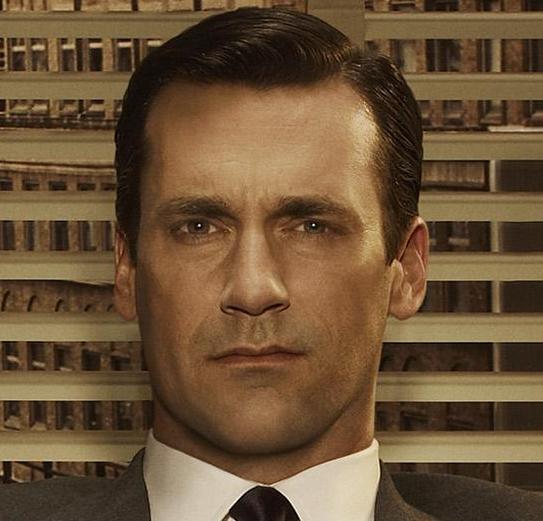
These days there seems to be a man-child backlash, which is good in a lot of ways: as any woman who’s ever tried to play video games online can tell you, the internet is filled with creepy, adolescent-minded adults. On the other hand, you’ve got people holding up Mad Men’s Don Draper as shining example of classic masculinity, and if you’re idolizing Don Draper for being “a real man,” you’re doing life wrong.

Are we even watching the same show?

Still, I think even the most mature person in the world would agree that arrested development can be pretty funny in small doses. This was never clearer than when Bowling For Soup, class clowns of the pop-punk world, hit the charts with “1985.”

Bowling For Soup had a minor hit two years earlier with “The Girl All The Bad Guys Want,” but “1985” (originally performed by heroes of the Splashdown soundtrack, SR-17) is the song they’re best known for. It’s fitting, too;  “1985” tells the story of, a woman obsessed with the pop culture of her youth, and Bowling For Soup are nothing if not pop-culture obsessed. Their songs and their videos are typically a mixture of juvenile humor and obvious cultural references, with the occasional dash of heartbroken against. They are, essentially, a single teenage boy embodied as four adult men.

We found them amusing for a while, but like I said: small doses. The double-shot of humor and nostalgia in “1985” was enough for America, and Bowling For Soup hasn’t had another hit since.

But why? I mean, aside from that thing I said about juvenile humor only being good in small doses. That still stands. But are there other reasons?

Let’s get this out of the way first: most of Bowling For Soup’s albums run for nearly an hour, and that is much, much too long. There are few genres less suited to long running time than pop-punk, and this holds especially true for Bowling For Soup, a band who only knows a few tricks and refuses to learn any more.

Another problem is that the guys Bowling For Soup aren’t that funny. The first single from their follow-up album, The Great Burrito Extortion Case, peaked at 97 on the Billboard Hot 100, which is the pop music equivalent of a polite smile and nod. The song, “High School Never Ends,” certainly didn’t merit much more than that. Yeah, guys, a lot of celebrities can be slotted into stereotypical high school social groups. That’s… that’s a good one. Excuse me, I have to go… uh… do something else.

If “High School Never Ends” was working too hard to stretch a moderately clever observation into a hilarious song, then their next single, “When We Die,” swung way too far in the opposite direction. It was a completely joke-free song that was both saccharine and vague, a deadly combination in a pop song. If the guys behind the song “I’m Gay” want to make me cry, they’d better have a damn good reason.

Bowling For Soup’s best songs struck a balance between sad and funny, wrapping the pop-culture jokes and juvenile humor around some sort of emotional core. “Ohio (Come Back To Texas)” is a single from the same album that spawned “1985”and it holds the dubious honor of being the best Bowling For Soup song ever made. “Ohio” tells the story of a Texan whose girlfriend runs off to Ohio with another guy. The narrator tries to get her to return by appealing to her love of rodeo, Mrs. Baird’s fruit pies and decent Mexican food.

Even if they were never all that funny, at least Bowling For Soup never beat you over the head with their jokes. If a gag fell flat, it’s okay; it was just one line in the song. It’s not like they would pick one abysmally unfunny joke and build the entire song around that, beating the joke into the ground until you weren’t sure if you were even capable of laughter anymore.  Yeah, I’m glad that never happened.

Oh, wait, that did happen, and it was called Sorry For Partyin’.

This cover just screams ” 99 Cent Bin in the back of the FYE.”

You don’t even need to listen to this album to find it annoying. Song titles like “Hooray For Beer,” “I Can’t Stand L.A.” and “I Don’t Wish You Were Dead Anymore” give you a pretty good idea of the level of wit on display here. All you really need to know, though, is that this album contains a song called “My Wena,” and if you’re not sad right now, you haven’t gotten the joke yet. Try saying it with a Boston accent.

That’s the kind of humor that wouldn’t even fly on an elementary school playground. If a ten-year-old heard that song, he would wrinkle his nose, adjust his thick-framed glasses and sigh about the horrible state of music these days.

“I Gotchoo”, a hip-hop influenced song that segues into a rap-metal bridge, is somehow the least terrible song here. For most bands, making a song that borrowed lyrics from the “fuzzy wuzzy was a bear” rhyme would be the low point of their entire career, a moment that they could never live down no matter how many albums they made with Rick Rubin. For Bowling For Soup, it was an album highlight. Honestly, it was just nice to hear a song that didn’t take a single joke and beat it into the ground.

Mercifully, no singles were released from Sorry For Partyin’. The official story is that Jive Records dropped the band right when the album was released, but I believe that there was a greater force at work. A force… for good. I guess you could say that Sorry For Partyin’ restored my faith in a just and loving God. Thanks, Bowling For Soup!

Maybe that’s a little dramatic, but really, that album is terrible. However, while Bowling For Soup has still not returned to the charts, their most recent album, Fishin’ For Woos, shows that the band is capable of producing music that doesn’t inspire bewildered rage.

On Fishin’ For Woos, the band eschews the one-joke songs of their previous album in favor of producing catchy, lightly humorous pop-punk ditties. It looks like there might be hope after all! The boys have learned that they don’t have to make crass, innuendo-laden, “funny” songs in order to entertain people. And hey, even if they’re never going to be Fountains Of Wayne, at least they don’t have to be The Bloodhound Gang.

Remember these guys? No? Good for you!

In fact, the album’s last track, “Graduation Trip,” shows that the band can make a bittersweet song without relying on pop-culture references for the sweetness. The story of “Graduation Trip” is similar to “1985,” with a middle-aged narrator reflecting on a lost love from his youth. Where “1985” devolved into jokes about Ozzy Osbourne, “Graduation Trip” commits to telling the story of someone who can’t let go of the past. The results aren’t exactly mind-blowing, but when you’re dealing with the boys from Bowling For Soup, any steps toward maturity are impressive.

Actually, scratch that–the men from Bowling For Soup. The band members are all in their forties now, they deserve a little respect. And hey, if they want to keep making songs about friends, chicks and guitars, songs like… well, “Friends Chicks Guitars,” more power to them. Because being a man-child might be unattractive, but no one likes a person who takes himself too seriously, either.

Just… lay off the dick jokes, okay, guys?