The Unofficial Jason Edwards Oscar-Palooza, Part 1

oscars part 1

Like all award shows, the Oscars are essentially meaningless. Not as much as the Golden Globes (which are actually kind of a scam, given the shady submission guidelines), the SAG (the most obviously self-congratulatory entry in a high self-congratulatory genre)  or the Emmys (which are just obviously a huge joke, I mean come on), but still, the Academy Awards are mostly a big, empty ceremony.

Which isn’t to say we shouldn’t honor films! Far from it. I just think it’s important to keep things in perspective, and remember that while the medium of film is important, the way we make up meaningless awards and write up stupid little top-ten lists can sometimes be a distraction from the power of the art form and from life in general.

So, that being said, here are my top ten movies of 2013, alongside some awards that will go completely unrecognized by the public at large but in every other way are just as meaningful as the Oscars.

10. The Counselor

Sure, let’s start right off with the one that will make you not take me seriously.

A lot has been written about this shiny, cold, bloody and nihilistic film: Salon called it “the worst movie ever made”–reason enough to check it out, in my book–while Badass Digest’s Devin Faraci wrote an intelligent defense of it that is more persuasive than anything I could write. It isn’t a perfect movie by any means, but I don’t want to call it a failure, either, because it’s successful at what it’s trying to do… the problem is, part of “what it’s trying to do” is make you feel gross about the movie and disconnected from its characters. But if you love impenetrable, over-written crime thrillers with fatalistic, film noir plotting, The Counselor is right up your alley. If you’re not interested in watching Cameron Diaz have sex with a car, well, I get it, but you should probably stay away from this movie.

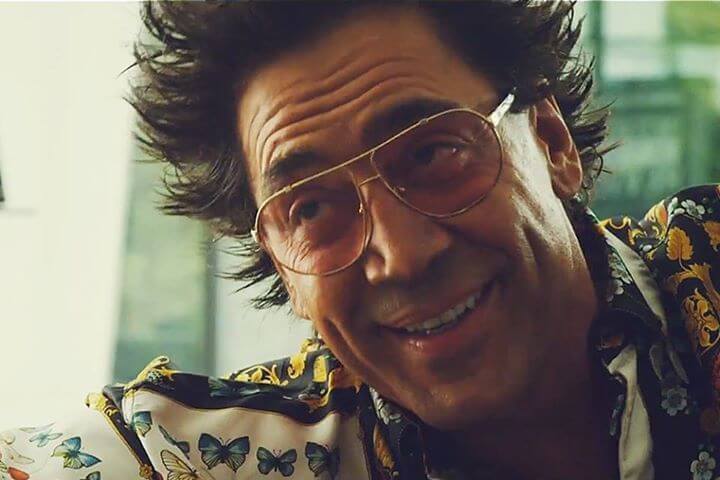
The best way I can think to explain this movie, aside from just showing you a picture of Javier Bardem’s hair, is to suggest that you think of it as spiritual successor to Cormac McCarthy’s earlier cinematic adaptation, No Country For Old Men. The plot of both movies follows the same general shape: the main character is a guy who makes a lot of bad decisions, but when he does one vaguely positive act, the whole universe collapses around him and a lot of very evil men hunt him to the ends of the earth. The only difference is, the wise old cop from Old Men is dead now and that dark future he foresaw is bearing down on us fast. At the end of the film, after we’ve seen an innocent woman’s decapitated body dumped into a landfill, one character implies that all the horrific violence we’ve just witnessed is only the beginning and that “the slaughter to come is probably beyond our imagining.” Yeeesh.

Or, put it like this: at one point in The Counselor, Bardem describes a nasty cartel murder-device called the “bolito”, basically a unstoppable mechanized noose made of impenetrable metal. Once someone loops it around your neck, cord draws tighter and tighter, drawing in on itself and severing your head in the process. McCarthy paints a picture of society that is not unlike the bolito: an entropic circle of violence that is forever in the process of destroying itself and everything inside it.

Why Did You Make This Movie? (Runner-Up)

Y’know, I hesitate to raise the subject again, because everyone is tired of it and I’m not qualified to add anything to the discussion, but in the wake of the ongoing Woody Allen scandal, it’s easy to see The Hunt for what it really is: a paranoid fantasy written and directed by a man who seems to be completely detached from reality. A well-respected white man is accused of sexual abuse by a young girl, and his life falls apart? Boy, someone let me know when we live in that world.

The quality of the film isn’t just irrelevant to its offensiveness, it’s actually part of the problem. The Hunt is a well-made movie that gets under your skin, but at the end of the story, the viewer is left with the lesson, “think twice before you believe the testimony of an abuse victim.” And so I have to ask the director: why is this the movie you wanted to make? Wouldn’t it have been more productive to focus on the reality of unreported and un-prosecuted sexual abuse, rather than the extremely small percentage of rape allegations that turn out to be false?

The funny thing is, Thomas Vinterberg already made a movie that captures the way our society actually responds to abuse, with all the denial and mockery that the abused have to face: it’s called The Celebration, and it’s actually quite good.

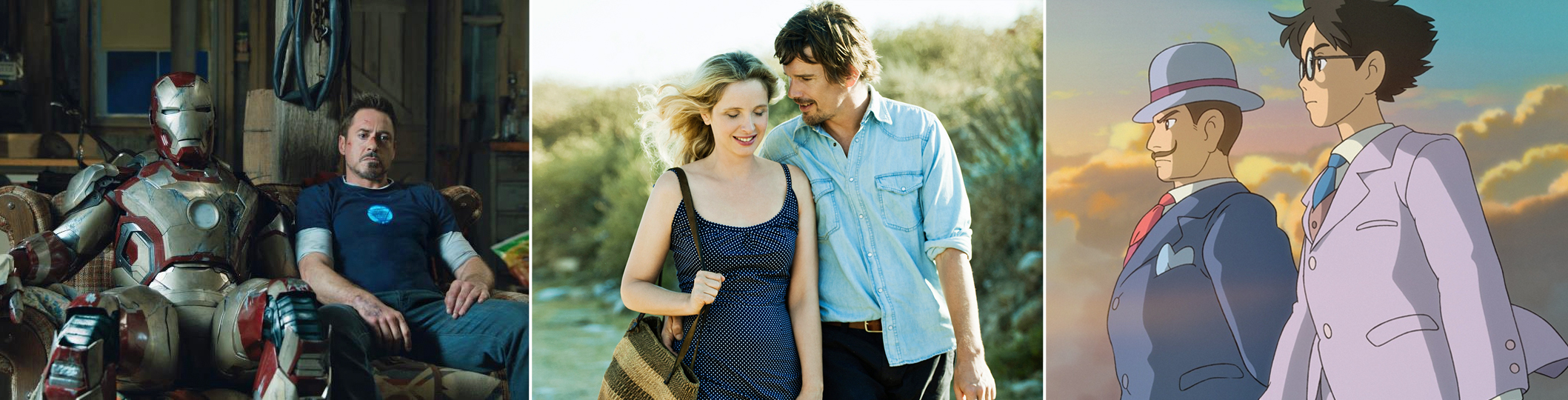
9. Iron Man 3

How awful are nerds? I say this as someone who identified as a nerd for most of his life: they are the worst. I tried to never take the label too seriously, but I stopped taking any pride in it when I realized that the internet has turned nerd culture into this insular world where angry white guys can tape up the shutters and just stew in their own bitterness, spewing venom at anyone who dares to touch their precious toys. It’s getting a little better–in the last year, we’ve made some progress in dismantling the ‘fake geek girl’ ideology, which is minor in terms of world-wide problems but is emblematic of a lot of societal issues–but even if we get rid of the sexism and the racism, we’ll still have a lot of insufferable people who can’t deal with any change to their beloved property.

If you’ve kept track of the response to Iron Man 3, you probably know where I’m going with this. The Mandarin is an old-school Iron Man who is such a racist Fu-Manchu-style caricature that his name is basically The Chinaman. I mean, for God’s sake, just look at this guy. One of the cleverest things about Iron Man 3, all in all an extremely quick-witted and funny movie, is the way it turned The Mandarin into a giant gag. It was one of the movie’s best jokes, and it doubled as a fantastic twist.

… but of course, a bunch of nerds went crazy because it wasn’t the REAL Mandarin. People started claiming that The Mandarin was Iron Man’s arch-nemesis, which might technically be true in the comics, but only because Iron Man was a C-Lister for so long that they didn’t bother to give him an nemesis that wasn’t completely embarrassing. The one-shot follow-up, “All Hail The King,” only makes matters worse by doubling back and assuring fans that no, no, their precious racism is still well intact in the Marvel Cinematic Universe.

I’m sorry, I know that didn’t have much to do with the actual movie, but this thing with The Mandarin has been bothering me for a while. Two quick reasons why Iron Man 3 is awesome: the plot is so well-constructed, particularly in terms of how the villain’s plan develops, that the whole story clicks into place with a single, wordless shot of a disabled little girl. Also, that kid that Tony hangs out with in Tennessee is the most likable child sidekick I’ve seen in a movie probably since forever.

8. Before Midnight

Richard Linklater’s ‘Before’ series has turned from one of the most unthinkable franchises in film history to one of our greatest cinematic trilogies. When Before Sunrise first came out, the ending was a wonderfully ambiguous move, a rorschach test for whether you were a cynic (Jesse and Celine never see each other again) or a romantic (they meet up fall in love and have lots of babies). After such an iconic ending, Before Sunset almost seemed like a novelty movie–the tagline, “what if you had a second chance with the one that got away,” pretty much covers it–but it had the benefit of being fantastic, filled with the same romance and wit as the first one but deepened by the regret of the main characters and the urgency of their second meeting; Before Sunset had a depth that the first movie lacked, and it turned out to be the most suspenseful “real time” movie ever made.

But Before Midnight proves the talents of Linklater and his fellow screenwriters, Ethan Hawke and Julie Delpy. With this entry in the ongoing saga of Jesse and Celine, the creative team has taken an idea that seemed as delicate as a dream or a floating bubble of soap and stretched it into a trilogy with growing thematic depth. The mere fact that the sequels aren’t terrible is kind of amazing, but Before Midnight might actually be the best yet. The focus is still squarely on Jesse and Celine, but by introducing a strong supporting cast (a first for the series), the filmmakers are able to expand their scope and subtly examine the way different relationships function and change.

Instead of ruining the unique nature of the first entry, the second and third films add perspective. Looking back on Before Sunrise reminds us how much history these two characters have together, while looking forward to Before Midnight makes Jesse and Celine’s infatuation in the first film even more endearing: as John Lennon might say, it’s real love — it’s re-e-e-e-e-eal.
Never forget that this was a thing that happened.

Never forget that this was a thing that happened.

Most Infuriating Conversation Overheard In A Coffee Shop

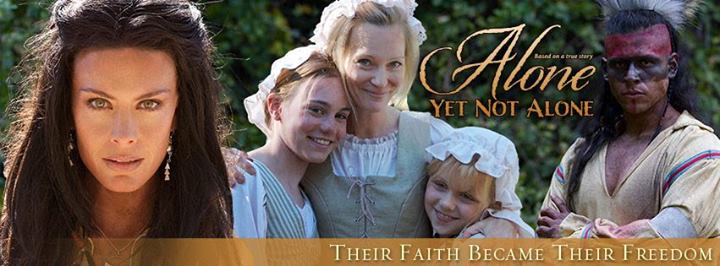
A note to the man decrying the unfairness of “Alone Yet Not Alone” being removed from the list of nominees for Best Original Song: first of all, while I take issue with your description of a racist Christian film with shady connections as “super, super indie,” technically, you are not incorrect. While the aesthetics and spirit of independent film are, even in their most self-indulgent, amateurish manifestations, of much greater artistic merit than the chintzy, moralizing, somehow-always-anti-abortion-no-matter-what spirit that most “Christian” films possess, Alone Yet Not Alone was about one-hundred light-years from a studio system. So, I’ll give you that one.

But your repeated complaints that Bruce Broughton was stripped of his nomination “just because he let people know about this movie he worked on” simply cannot pass. You are, again, technically correct, but Broughton’s seemingly-innocent message was not, as you seem to characterize it, an attempt to make up for the lack of an advertising budget. It was, in fact, a flagrant defiance of the Academy protocol, addressed to a group of members whose names Broughton would not have known if not for his long tenure as Academy governor. You see, “letting people know” that he worked on the movie goes against the way that Best Original Song voting is set up, a fact that Broughton would have known. This makes his email campaign less “grassroots” and more “slimy and underhanded.”

So, to the man sitting on the couch fifteen feet to my right and complaining loudly to his friend about this nonexistent case of anti-Christian persecution, please consider yourself hastily corrected. I only wish I could have gotten this message to you while we were both in the coffee shop. Instead, I will have to be satisfied with battling an imaginary version of you inside my head for the rest of my life.

7. The Wind Rises

I probably shouldn’t say much about this one, since my knowledge of Hayao Miyazaki is limited to Spirited Away (which I saw when I was too young to appreciate it) and one other Studio Ghibli movie directed by his son (From Up On Poppy Hill, a gorgeously animated snooze-fest with a lovely score). Still, I hope my status as a Miyazaki novice won’t diminish the impact when I say that this movie is masterful. The director integrates his skill for dream-like imagery into the real-life story of Jiro Horikoshi, avoiding the constrictions of a biopic by integrating elements of fiction that turn the movie into a true epic.

Much has been made of the movie’s view of the main characters actions, and while I have to admit that I have some concerns of my own, I think The Wind Rises is complex enough to recognize the hero’s complicity in the horrors of World War II and how his own narrow-minded view of his dreams lead to that place (after all, one of the first things we learn about him is that he’s near-sighted), while still recognizing the beauty of what he accomplished.

Also: I ended up seeing the English dubbed version as opposed to the subtitled version. I was prepared for some awful voice work, and while it’s occasionally awkward, everyone involved does a pretty good job. And Werner Herzog is in it! Which is nice.

Best Suits

The best part about watching The Wolf Of Wall Street on the big screen (besides the fact you get to experience the debauchery in all of its widescreen glory and the accusatory final shot in all of its uncomfortable directness — boy, that movie really is vicious) is the suits. All those double-breasted, pinstriped suits, with awful Italian silk neckties worn right up on the collar. Not to mention everything about Jonah Hill’s character, from that pastel shirt and high-waisted jeans combo to his unnaturally white teeth. The fashion in this movie is hideous, but like everything else about Wolf, it’s hideous to an end. And for fans of that unconsciously gaudy era when 80’s fashion was warping 90’s fashion, it is a thing of beauty.

6. Short Term 12

Fun fact: Destin Daniel Cretton, director of Short Term 12, worked in a group home for at-risk teenagers, much like the one featured in the film!

Fun fact #2: If you have seen Short Term 12, you don’t need me to tell you that, because the reality of Cretton’s experience shows in every frame of the movie.

Short Term 12 walks the fine line between giving a realistic, detailed, lived-in portrait of live in a group home and delivering a satisfying narrative, and it does it with finesse. I’ve never spent any time in a group home, so I can’t speak to the accuracy of Cretton’s portrayal, but I do know a lot about movies, and I know the dangers of basing a work of art off of a real-life experience, and Cretton does it right. He’s clearly a talented filmmaker, and by letting his real life fuel his storytelling, he gave life to characters that, in less assured hands, might come off as two-dimensional “issues” rather than real people.

Despite the movie’s heart-shredding qualities, it does have an arc of healing and redemption, and man, you sure do feel it. I get emotional just running through all the fantastic moments in Short Term 12. The story that Mason tells at the beginning, contrasted with the story he tells at the end. Marcus’s rap. When Grace finally breaks down to Jayden. Oh, and Mason’s birthday party–a two-minute scene that gives you the character’s entire life story through detail.

If you need any more proof that the Oscars are irrelevant, consider the fact that this movie received no attention. Or, consider the fact that Academy members weren’t even sent screeners of this movie. I mean, seriously.
Dispatches From The Mainstream: “Real and True”

I’m afraid that the currents of pop music are too vast and weird for me to comprehend, dear reader, because this has to be the most random three artists I have ever seen assembled together on one song.

Let’s start with Miley, since she’s pretty much naked in this video and I’m afraid that’s all people are going to take away from it. Less than six months ago, having Miley turn up in a song like this, dressed the way she is, would have been unthinkable. Die-hards (and people with too much time on their hands) would have known from the ominous tone and caged-bird imagery of “Can’t Be Tamed” that a new Miley was on the way, but it was a huge jump from the pole-dancing hullabaloo of “Party in the U.S.A.” (“You guys don’t think that Hannah Montana might be a sexual being, do you? No, me neither, that would drastically undermine my understanding of the world”) to “We Can’t Stop” and the madness of the accompanying VMAs performance, from which we as a nation are just beginning to recover.

Mr. Hudson is a long-time favorite of mine, but since most people know him as “that guy from Jay-Z’s worst song,” I’ll do a quick recap: Mr. Hudson made a lovely and intelligent indie-pop record in 2007, got discovered by Kanye West, who helped Hudson make his shiny-but-uneven follow-up Straight No Chaser, which left him in the awkward position of a guy who desperately tried to be a big-name pop star and failed. Since then, he’s languished in the background of Kanye’s G.O.O.D. Music label, formed the hyperactive BIGkids side-project with Rosie Bones and… now he’s singing about entropy on a song with Future.

Future is perpetually living 2008 by way Kanye West and Lil Wayne at the same time. He never steps away from Auto-Tune, even when he’s rapping, but he doesn’t just use it to express emotion—though he does plenty of that. His constant vocal modification is just part of the loveable and all-encompassing weirdness that brings to mind a time when Lil Wayne wasn’t a stand-in for everything wrong with Hip-Hop; he was actually the underdog. Future’s lyrical ability is nowhere near Wayne at his peak, but his melodic sensibility is the real draw, and even when he throws out a real clunker of a verse, there’s usually something endearing about it.

real and true 2

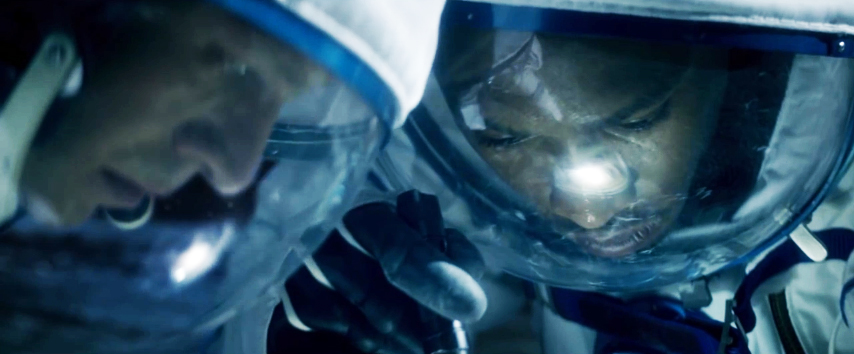
They’ve really got their best guys on this mission, huh?

Despite his open embrace of tenderness and vulnerability, “Real and True” is the furthest Future has ventured into pure ballad territory. The beat is sparse and piano centric, but the main instrument is Future’s voice, which runs through the background of the entire song. You wouldn’t think that a highly processed series of moans could lend a song this sort of melancholy feel, but there it is.

His delivery in the first verse—where he pays himself and his beau a series of compliments in a second person perspective—is close to rapping, but his next verse is straight-up singing. And if Future has trouble writing coherent rap verses, his songwriting game is all over the place.

Still, as fun as it is to watch Future goofily grin in the video as he says things of himself that no one has ever said or ever will say, there’s something genuinely affecting about the final verse. You’ll rarely find a rapper being this nakedly emotional or spouting a full-fledged endorsement of commitment. And even if the three lines that follow sound like they came from three separate songs, well, they’re still nice.

I could never be scared of commitment

I can prevail through life without bein’ malicious

I can’t hold you full responsible for your mischief

I hope you are never huntin’ me with vengeance

I mean, that’s a cool sentiment, right? That you can succeed in life without actively harming others. And I don’t really know whom he’s addressing in that last line, but hey, I get it. I hope no one ever hunts me with vengeance either, Future.

Oh, Miley Cyrus is on this song, right? I guess we should talk about that some more. But do you really need someone else’s opinion on Ms. Cyrus? I don’t want to delve into the cultural discussion surrounding her new identity, but I would like to say that Halloween was three weeks ago, so it might be time to take off the Rihanna costume.

Mr. Hudson sounds great belting out the chorus, and I hope this song catches on, because I’d love a new album from him. Until then, I GUESS I’ll settle for this intergalactic sci-fi epic where he teams up with Future to rescue lost astronaut Miley Cyrus who has turned into a glitter person with the power of teleportation. Beggars can’t be choosers.

The Forty Ounce, Episode 20: The Early Years/For The Ladies

A quick glance around the contents of this website should demonstrate that I have a deep fondness for pop culture in all of its forms. What you might not know is that this fondness has existed since I was quite young, although it didn’t truly begin to blossom until I was in high school. What you also might not know is that I was crazy in high school.

A new episode of The Forty Ounce is now available for your listening pleasure. In the 17 months since this podcast began, Daniel and I have ventured far away from the original format, and this is our furthest excursion yet. The real theme is “stories about how weird we were as teenagers,” but there’s a secondary theme about two kids who loved music and movies but didn’t quite know how to process them in a healthy manner.

Actually, my first story isn’t even about me; I was part of the events that transpired, but a close friend of mine (who has okayed me sharing this story) was the instigator. I make up for it with a late-in-the-game anecdote concerning my sometimes co-author and podcasting rival, Kate. Sorry again, Kate.

These stories only scratch the surface of me and Daniel’s barely-restrained madness, but they still paint a decent picture… even after I cut out the story about how I used to bring a video camera to parties and film everything. Because, seriously, I used to do that.

Review: Kick Ass 1 & 2

kick ass 2

Aaron Taylor-Johnson and Chloë Grace Moretz in ‘Kick Ass 2’.

It’s hard to number all the ways that the Kick Ass movies don’t work, but let’s start with the basics: they don’t follow through on their own concept. That concept–what if someone in the real world tried to be a supehero?—offers a world of possibilities that go unexplored in these movies. Some lip service is paid to the idea, but mostly it just boils down to the main character being an ineffectual wimp who gets beat up a lot. But the movies themselves follow a lot of the same beats as a typical superhero narrative, only with sarcastic air quotes around everything, so what you end up with is a b-grade superhero movie with no stakes, no reason to get invested, and a main character who doesn’t really accomplish anything.

It’s not just Kick Ass, though. Neither movie has any idea what it wants to do with any of the characters. The concept behind Big Daddy and Hit Girl—a traumatized police officer drafting his prepubescent daughter into a war on crime—promises a subversive look at Batman, but once the filmmakers realized they could get laughs out of a little girl cussing and murdering people, the hope of even an undergrad level of deconstruction vanished. Hit-Girl’s paper-thin characterization is especially painful when you realize she’s the most well drawn character in the franchise. Everyone else’s pain and motivation is treated like a joke, flipped around between scenes or ignored. Kick Ass’s mom dies in the opening minutes of the first movie and is never mentioned again. One harmless dumb character that provided comic relief in the first movie becomes villainously stupid in the second, causing a major tragedy he never seems to comprehend. He gets a moment of redemption at the end, but boy, who could possibly care?

Pacing is another major issue: both movies were based off six-issue comic-book miniseries, and it shows. Both movies cut between three different groups of characters. In the first movie, this eliminates any chance for suspense, as we know ahead of time all the forces that are moving around and against the main character. In the second movie, where the chance of suspense is never even on the table, it just underlines how much time is being wasted. Hit-Girl spends half of Kick Ass 2 in her own sub-par version of Mean Girls (the term “Queen Bee” even gets tossed around) and by the time she’s out of it, the characters have learned nothing and the audience has gained nothing, save for a vomit/diarrhea joke that will make any viewer over the age of 11 uncomfortable and embarrassed.

Not only does the audience never get a sense of the story’s shape, we’re never sure how we should feel about the story itself. In a smarter movie, this kind of moral ambiguity would be welcome, but in a series where every plot point is underlined by the main character’s inane, sub-Dexter narration, any moment where something manages to be unclear is a failure. The first Kick Ass is at least consistent in its own warped morality; consistent and far too impressed with itself, but still, consistent. In the sequel, both the titular hero and Hit-Girl make solemn vows to end hang up their capes, but when they inevitably back down from these oaths (Kick Ass changes his mind a mere three scenes later), it’s not clear if we’re supposed to applaud them for sticking to their beliefs or sympathize with them because they have to betray their parents to get vengeance. In Hit-Girl’s case, the movie can’t even be bothered to give a decent explanation for her abandoning her cause, meaning that the one thing people reliably enjoyed about the first movie—a little girl cussing and murdering people—gets put on hold for no good reason.

Even though they were in development at roughly the same time, Kick Ass feels like the training-wheels version of James Gunn’s Super. Kick Ass is a high school junior doodling in his notebook; Super is bipolar grad student who just finished writing a thesis on superheroes. Super brings out all the twisted elements of the “normal-guy-becomes-a-superhero” story that Kick Ass can only snicker at. The hero of Super is pathetic and delusional in a much deeper and sadder way than Kick Ass, but the movie lets us root for him and even lets him succeed in the end. Ellen Page joins in as the sidekick and in just a few scenes she shows just what kind of lunatic would be attracted to costumed heroics, and she does it in a much more effective manner than anything the Kick Ass films ever attempted.

Kick Ass 2’s confused sense of self extends into the final two shots, which dismiss the need for real-life superheroes and then immediately promise a beefed-up sequel. If the filmmakers make good on this promise—though current box office data indicates they probably won’t—let’s hope they can give us the zany, all-out superhero story they’re clearly longing to give us without any of the false aspirations to “realism”, which, by the way, is a word Mark Millar wouldn’t understand if it knocked him out of a skyscraper window and blew up.

Review: The Conjuring

Vera Farmiga as real-life paranormal investigator Lorraine Warren.

Judging from his past work, you wouldn’t think James Wan was capable of a movie like The Conjuring. The first Saw film—the only one for which Wan can be held responsible—didn’t foresee the grim assembly-line product that the series would become, but it was still smothered with contrast, color-correction and fast-forward effects disguised as ‘style’. Insidious is Wan’s previous film and the one that most resembles The Conjuring, but even it was saddled with the assumption that blue filters are cool and people in Victorian clothing are inherently creepy, to say nothing of a third act that went completely off the rails.

Even if some of the plot turns mirror those of Insidious, The Conjuring is an improvement in every way: it’s a movie of earth tones, grounded scares and directorial restraint. Its pleasures don’t come from gleefully deployed, over-the-top buckets of gore, but from slow-burn scares. Wan takes his time to set things up, and when it clicks, it yields beautiful results, like the ongoing “hide-and-clap” routine. Wan’s continuing fascination with ghost-hunters is well-integrated into the plot, where as the ghost-hunters in Insidious provided some brief amusement but felt dropped in from another movie entirely.

The scares in the The Conjuring take the form of set-pieces so cleverly constructed that genre fans—or really, anyone who’s seen a horror movie—are as likely to smile as they are to shudder, such as the scene where Lili Taylor wanders into her daughter’s room blindfolded. It’s a feeling somewhat akin to seeing a long-anticipated bit of plot machinery click into place on a long-running television show, and it wouldn’t be possible if Wan didn’t take his time.

There are only two moments that qualify as “jump-scares,” which are typically derided as cheap shock. This sort of “come-close-to-the-camera-and-screen” trick is obnoxious if a movie offers you nothing else, but there’s something to be said for shock when it’s used properly and The Conjuring utilizes it in an unusual way. In most jump-scares, the audience is off the hook after the killer (or what have you) makes his jolt-inducing reveal. Most of the time, a jump-scare ends and the protagonist snaps awake from a dream. The first instance jump-scare in The Conjuring—which, like so many of the movie’s best moments, involves the old wardrobe in the bedroom—cuts away at the height of terror. The result is like an unresolved musical note played at high volume: we’re startled, yes, but we also fear for the character’s safety.

The film–apparently based on a true story–is set in 1971, and Wan flirts with Ti West-esque late-70’s pastiche, but it only amounts to a nifty title-card and a few old-school zooms. CGI is used sparingly: an exploding chair that shows up late in the film stands out, but only because it’s one of the few times that modern film-making rears its head. Of course, if the movie was actually made in the era in which it’s set—

Oh, big spoiler coming up.

–then the filmmakers might have gone for a darker ending, instead of letting everyone live and, less forgivably, indulging in the cliché that has sapped the power of many a haunted house story: the “You’re not strong!” ending, where the haunting spirit is defeated by “the indomitable will of the human spirit” or some other such malarkey. This time, a demon that has claimed numerous lives is done in by the memory of a pleasant day in the beach. Like everything else in the movie, it’s properly set up, but boy, what a waste.

Still, The Conjuring packs enough creepy visuals into the rote exorcism finale to make it worthwhile, right up until the power of love wins out. If the ending lets the wind out of the movie’s sails a little bit, well, it’s a rare modern horror movie that can hold itself together so well for so long.

Movies Made Better: Pacific Rim

pacific rim 1

Dimensional Rift Discovered in Pacific Ocean

By PHILLIP MASON

Scientists are shocked to report that a “portal between worlds” has opened up somewhere in the Pacific Ocean. A research team first became aware of the rift due to the strange sonic readings from the area, but it was quickly discovered that objects, seemingly extra-dimensional in origin, are emerging from the portal.

In a twist that officials some have called “highly ironic” and others “just a regular old coincidence, thank you very much,” the only objects discovered thus far are copies of Guillermo del Toro’s Pacific Rim on DVD. The alien nature of these DVDs was first hypothesized based on the professional-style packaging.

“In our world, Pacific Rim was just released in theatres,” said one unnamed expert, “But all these DVDs are too good-looking to be pirated… our immediate conclusion was that they came from a universe where the movie was released roughly four to six months earlier.”

The release date isn’t the only thing that’s different about these alternate Pacific Rims: out of the four that have so far been discovered, none of them follows the same plot as the one from our universe (hereafter referred to as PR Prime).

A crack squad of film critics was called in to analyze the movies, and what they have reported back is shocking. Each of the alternate movies is unique, though there are some broad similarities. None of the alternate Pacific Rims include the five-year jump that follows the prologue in our version, and none of them make any mention of “the wall”, a plot point so nonsensical and inconsequential that readers would be forgiven for forgetting that it ever happened at all.

Pacific Rim Alternate Version #1:

The first alternate Pacific Rim (PR) focuses on the opening years of the Human-Kaiju war, instead of breezing through it in a prologue. The very first scene is from the point of view of a young Asian girl (later revealed to be Mako), visiting San Francisco with her parents at the time of the first attack. We see the monster from her point of view, immediately establishing the sense of scale and giving us a personal investment in the devastation.

Some critics derided this plot as “obvious,” tossing around the term “destruction porn” without care. Still, few can deny that the spectacle is enthralling. With each subsequent attack, the death toll grows, and the governments of the world get more desperate, leading to the development of the Jaeger program. It’s thrilling and even a little uplifting to see so the people of the world put aside petty differences in race and creed and band together to save the planet. In this version of the film, the first Jaeger/Kaiju fight is built up to for nearly an hour, but when it comes, it is satisfying and exciting. The movie treats it as a spectacular event, from a technological standpoint and a humanistic one, as opposed to the “just another day at the office” tone of the first battle from PR Prime.

While the first alternate PR ends after a climactic victory that turns the tide for the humans, it ends before the war is actually won; a blatant sequel hook, according to critics, and widely regarded as this version’s biggest flaw.

Pacific Rim Alternate Version #2:

The second version focuses on humanity’s last-ditch effort to defeat the Kaiju. In many ways, this version is the most similar to ours: the prologue explaining the opening years of the war is still intact, though it omits the confusing and unexplained details about how the humans “got good at winning” and turned the Kaiju into some sort of joke.

In the second alternate PR, Raleigh is still a washed-up pilot, agonizing over the death of his brother years earlier. Instead of leaving the Jaeger program, he continues to work within it as a technician. Mako works alongside Raleigh as a test pilot in this version, but Raleigh gives her little notice until he discovers that she lost her family in a Kaiju attack.

In PR #2, non-familial drifts are considered impossible; Dr. Geiszler is the only person to propose that two unrelated pilots could work together. Raleigh senses that his and Mako’s shared tragedy might give them the bond they need to drift successfully, and he gets a chance to put his plan into action when a surprise attack leaves Chuck Hansen and his father in critical condition.

In the beginning, Raleigh and Mako are terrible partners. Their first drift re-opens old wounds and leaves them both crippled with guilt and fear over their lost family, and they nearly trigger a nuclear meltdown because of it. Only when they accept each other’s companionship and trust are they able to work as a team; their victory over depression is tied directly to their victory over the Kaiju. Critics note that this plot point, while overly sentimental, does create emotional stakes for the characters not present in PR Prime, and allows the audience to better connect with their struggle.

Also in this version, the plan to drop the Jaeger’s core into the rift is a last-minute improvisation by Dr. Geiszler, who returns from his movie-long mission just as the final battle reaches its peak. Up until this point, no one has figured out a way to destroy the rift, thus adding suspense to the climax and not rendering Geiszler’s mission essentially pointless, as it was in PR Prime.

Pacific Rim Alternate Version #3:

The third and final version to be discovered thus far has the most radically different plot from any other PR. Instead of focusing on a single man’s fall and redemption, the plot concerns a group of people that come together from different backgrounds to join the Jaeger program and defend the Earth. Raleigh’s character is completely removed, as is Chuck Hansen’s father. Greater development is given to Sasha and Alexis Kaidanovsky from Russia and the Wei Tang triplets from China.

Chuck takes on most of Raleigh’s role, though he receives less screen time. As in PR Prime, he is presented as arrogant and unlikeable, though the death of his father in the prologue lends him a degree of humanity. He is paired with Mako (a competent if untested pilot in this version, as opposed to the bumbling, simpering character from the original film) for the first half of the movie, but when two Kaiju attack at once, his inability to works with the others leads to his own death and the destruction of much of the base.

In the end, Stacker Pentecost partners with Mako for the final battle, their father/daughter relationship providing emotional depth that isn’t present in PR Rime’s under-developed love story. Stacker sacrifices himself to destroy the rift and protect Mako, while the Russians and the Chinese fight off the Class-5 Kaiju with their Jeagers instead of setting off a bomb.

When the rift-destroying explosion does come, both remaining Jaegers and the Kaiju are caught in the blast. The Kaiju is destroyed, but it’s not clear at first if any of the pilots made it out in time.

Mako’s escape-pod/life-boat surfaces and she looks around. For a moment, she is completely alone in the middle of the ocean. Almost on the verge of tears, she sees an escape pod surface, followed by another… then another… then three more in rapid succession. Mako is thrilled that her fellow pilots survived, but she’s obviously disappointed that Stacker didn’t make it. However, as Tendo Choi reveals, Stacker’s escape pod entered the rift moments before the explosion, leaving his survival doubtful but ultimately ambiguous.

Sociologists have been particularly fascinated by this version of the film, coming as it does from a society so different from ours, one in which the default point of view in popular culture is not that of the heterosexual white man.

The Forty Ounce, Episode 18: You Murdered Those People, Batman

Forty Ounce back in the house again/podcasting from our couch again.

After (another) longer hiatus, Jason and Daniel are back with an all-new episode of the (somewhat) revamped Forty Ounce!

This time, Jason and Daniel try to tell stories about their personal lives but end up talking about Pitbull, Icona Pop and Batman. The boys also check in with a couple of new friends who are sure to delight and infuriate in equal measure… but we’ll let you decide for yourself.

This time, we consciously tried to veer away from talking about pop music but spent two-thirds of the podcast doing just that. The real meat of our “personal lives” discussion got pushed back to the next episode, which will be published just as soon as I can stop cringing about how weird I was in high school.

(also, this episode opens with a pretty dumb, out-of-nowhere, extended joke, which I’m saying now just in case you’re not familiar with our podcast)

Dispatches From The Mainstream: 7/22/2013

dispatchesjuly

Avril Lavigne – Here’s To Never Growing Up

Don’t-give-a-whaaat Ke$ha-style partying by way of Taylor Swift’s pseudo-countrified pop. Is this what it’s come to? I thought you were better than this, Avril! Actually, no, I didn’t, but seeing someone clinging to relevancy this desperately is sad, unless it’s someone truly heinous, which Lavigne never was. Did you know she’s 28? I’m not saying that to make you feel old—she’s too old to sell this kind of bubblegum and too young to get any pathos from the concept. It’s not surprising that she’s chose this path: while most of her music is general adult contemporary, “Girlfriend” is her biggest and brattiest song. Never growing up isn’t so much a lifestyle for Lavigne as it is a marketing ploy.

But the real issue here is that name-drop at the front of the chorus. What Radiohead song do you know that’s suitable to be sang at the top of your lungs? Ms. Perry’s “The One Who Got Away” raised similar questions last year, but Lavigne throws hers right into the refrain and forces you to really grapple with it. Which Radiohead album are these ladies listening to? Is “Street Spirit (Fade Out)” appropriate music for a Mustang make-out session? Is it even possible to sing “Kid A” at the volume Lavigne suggests? I have more questions than answers, obviously.

David Guetta – Play Hard (feat. Akon & Ne-Yo)

EDM is the musical equivalent of empty calories, but even by the standards of modern dance music, David Guetta’s work is dumb with a capital ‘d’. Moreso than Calvin Harris, David Guetta’s music is derivative and comically unsubtle, and some accuse Harris of making the same song over and over again, at least he’s doing it without ripping off Afrojack. Although, D. Guetta and Afrojack have a working relationship, so… maybe Mr. Jack is cool with it?

I don’t want Guetta to be a plagiarist because despite his obvious flaws and the role he played in transforming the charts into an across-the-board synth-fueled bacchanalia, I like his music. It’s big and loud and you can jog to it, and on occasion, it’s fantastic. (See: “Without You”). “Play Hard” doesn’t have a lot going for it aside from that famous synth line in the chorus, but at least this time Guetta credited the original artist.

“Play Hard” is dull—Akon can really suck the energy out of a verse, huh?—but it’s worth a listen just to hear the sound of pop music eating itself in some kind of substance-free Ouroboros scenario. “Better Off Alone” came from a different time, when electronic music was a rarity on the charts, sung by unknowns. Now it’s everywhere, with big-name artists of all genres ready and willing to jump on the train. Alice DeeJay is remembered fondly for their one big song; when David Guetta finally runs out of steam (around the time he samples the chorus from “Castles In The Sky”), he’ll be looked back on with exhaustion and annoyance. Alas, the perils of success.

Capital Cities – Safe And Sound

Here’s the argument against Guetta-style hedomism. This falls somewhere between “alternative” and “dance,” but wherever you place it, “Safe And Sound” is a great reminder that the synthesizer has more settings than “hedonism.” Even in pop music, it doesn’t have to be all build-up and release. Electronic sounds can be more soothing and inviting than a six-string if you use them right.

It would feel a little silly to call this minimalism, but it’s simple, for sure. All I can make out is a synth, a drum machine, a horn, and two guys singing—maybe a little guitar on the bridge, but only for accent. And it works! So much Top 40 is overstuffed to the point where you can’t identify the individual instruments, so it’s nice to hear something this basic.

It’s a bit repetitive and there’s one real groaner of a lyric—“hurricane of frowns”—but the message of the song is so uplifting that it feels more like a mantra, something you chant in order to encourage positive thoughts. The music just goes along with that: the synth line is warm and smooth, and the horn, oh, the horn. The horn is the great under-used instrument of modern pop music. It’s almost cheap how easily a horn signifies triumph, hopefulness or just sheer exuberance, but it’s used so sparingly in “Capital Cities” for what a major part of the song it is. I say we give them a pass. In fact, I say we give everyone a pass. Let’s throw a horn into every pop song we can until we’re all sick of it.

I Myself Can Not: Savoureux

imyselfcannot(in which Jason and Kate finally finish up their season-long look at Hannibal, miraculously getting their final review logged before the second season begins)

JASON: Well, gee, Kate: where do we go from here?

I’ve talked before about my expectations for Hannibal and how they were quickly dashed when the show turned out to be a moody, intelligent, well-shot crime drama with an endearingly dark obsession with death and mutilation. But I formed another set of expectations when Bryan Fuller described the season’s arc as “the story of a man losing his mind” (or something to that effect). I figured Will Graham would slowly drift away from reality, only to be pulled back at the last minute before something really terrible happened. I expected that Hannibal would clean up his mess and move forward with the rest of the world none the wiser to his true nature… and I thought we might end the season with an ironically emotional moment cementing Hannibal as Will’s only true friend.

And that’s sure not what we got!

To recap: after Hannibal force-fed Will a piece of Abigail’s ear, he was able to pin Will for her murder and several other murders that Hannibal himself committed this season. It looks like Will might FINALLY get the medical attention he needs, but due to Hannibal’s meddling, it won’t account for the time he supposedly killed all those people. Will gets locked up in a facility for the criminally insane, but not before he finally realizes that Hannibal isn’t what he appears to be.

Actually, so maybe we should back up a little. We haven’t discussed this show in three weeks, after all.

In a way, these last three episodes all function as one big finale, bringing back characters from previous episodes and tying up their stories. It was especially nice to see Abel Gideon show back, after the show seemingly dropped the Chesapeake Ripper plot, a storyline that impacted all the main characters to some degree. The culmination of Gideon’s storyline was mostly about Graham and his deteriorating mental state, though Jack Crawford’s past failures drove his obsession with the case and informed every action he took, even if we weren’t overtly reminded of it. In fact, the culmination of the entire season ended up being about Will and Dr. Lecter, which is the way it should be… but still, Laurence Fishburne’s version of Jack Crawford was so entertaining, I’m a little disappointed we didn’t get any more from the subplot about his wife’s cancer. I’d like to seen him get even more material next year.

Then there’s Abigail… I guess we should have seen it coming, but it was still chilling to see the walls close in on her like that. Before I throw it to you, Kate, I’d like to say that the final scene of episode 12 was my favorite of the entire season, specifically the moment where Abigail asks the question that we’ve been asking all season: why, Hannibal? What drove you to warn Garret Jacob Hobbs of his impending death and then to become so invested in his daughter’s life? The answer: curiosity. It was the obvious answer, but to hear Dr. Lecter say it so matter-of-factly was chilling.

KATE: I agree. Hannibal seems like such a psychopath that it would be folly to try and hash out his motivations, although many will theoretically try and fail in the episodes to come. And yet…he’s astonishingly simple. Hannibal is a psychiatrist. He’s interested in human behavior and motivation, so why wouldn’t he be curious to see what people do when put into certain scenarios? If you throw in the fact that he’s an avid cannibal and all around psychopath, then it makes almost perfect sense. Of course, that doesn’t make it any less chilling, which is why the show works as a series and why Hannibal is a great character.

Alright, now that I’ve effectively praised the show, who’s in the mood for some crackpot theories? I thought so! I can’t tell you why, but I have a sneaking suspicion that Abigail isn’t dead. Yeah, Will coughed up one of her ears and yeah, the floor of the Hobbes’ house is smeared with a mysterious blood like stain…but that doesn’t mean anything! I’ve always been a firm believer in the TV convention that if the audience doesn’t see a body, the character probably isn’t dead. This show invested so heavily in Abigail, both as a plot device and motivation for the other characters to develop and grow. She wasn’t a one episode guest star like Lance Henriksen or Molly Shannon. Why would they kill her? Pure shock value? If Hannibal was trying to frame Will as the copycat Chesapeake Ripper, wouldn’t he have planted her body somewhere in some ornate, ceremonial fashion? If Hannibal did kill Abigail, do you think he ate her? That seems like something Hannibal would find rude, given their prior relationship. It’s one thing for Hannibal to murder a poorly trained flautist; it’s quite another for him to kill and eat someone he thought of as his daughter.

At any rate, all we know for sure at this point is that Abigail is missing an ear.  On the other hand, I may very well be grasping at straws in a vain attempt to convince myself that Hannibal isn’t over for the next year or so. What are we gonna do, Jason? What are we going to do without Hannibal?

JASON: I’d usually agree with you about the bodies, but in this case, I think we actually DID see a body–it was just in the form of veal! Abigail does seem like a major character to kill off, but I think it was meant to shock. Not a cheap, empty kind of shock, but the shock that comes with the title character of the show murdering his surrogate daughter after we spent the whole season becoming invested in her. I just don’t think there’s any way Hannibal could let her live at that point, and I think he ate her because… well, that’s kind of his thing. It also harkens back to the Hobbs family philosophy of “honoring” every part of the kill, which is something Hannibal could definitely get behind in this situation.

But speaking of crackpot theories, I have one of my own! It actually has to do with something you mentioned a few weeks ago, but I never go the chance to address: the one time Freddie Lounds eats dinner at Hannibal’s, she specifically requests a vegetarian meal. As far as I remember, that makes her the only main character who hasn’t eaten human flesh (inadvertently or otherwise). That’s got to mean something, right? Either it’s a nice bit of irony that the most morally suspect character on the show is the only one not to indulge in cannibalism… or it’s a sign that Freddie Lounds isn’t as sleazy as we think, and that we shouldn’t be so quick to judge her!

It’ll come as no surprise to you that Freddie is my favorite character at this point, but I don’t want to make excuses for her. She’s fucked over more than a few people, and she’s (mostly) responsible for that cop’s death in episode two. Still, there’s something so pure in her self-interest and sleaziness… she’s like that grape Hannibal showed off in one episode–the same all the way through, from the skin down to the core. Hannibal is the exact opposite, a black-hearted villain in a “person suit”. Jack Crawford is awfully shifty in his treatment of Will, Jack’s wife lies about having cancer, Will is honest with others most of the time but never honest with himself, and Alana Bloom… well, I guess Alana’s okay. She IS the reason that Hannibal got involved in the first place, but that’s just because she was wrong, not because she was being dishonest. Maybe this crackpot theory is still more of a crackpot hypothesis.

I don’t know what we’ll do for the next year, Kate, I just don’t know! But what are you most excited about in the second season (besides the fact that it’s actually happening?) The prospect of seeing Mason Verger on television is almost too much to bear, and then there’s this little bit of news that I’m very excited to see play out.

KATE: Well now that you’ve told me that, I think I’m most excited about David Bowie! Will it really happen? Do we really have to wait a whole year to find out?  Have they announced the premiere date of the second season? I need to know how much longer I have to wait, Jason! I need to know!

Where is Mason Verger going to fit into all of this? In the novels, Mason is the only one of Hannibal’s victims to survive (albeit with half of a face). He also plays a vital role in putting Hannibal in jail, so where are they going? It’s actually a somewhat interesting prospect. Will and Mason (in the novels at least) are the two characters that experience Hannibal’s violence first hand while living to tell the tale. That seems like a workable angle for the television show to play off of, but will they really put Hannibal in a jail cell this early? He should be nice and incarcerated by the fourth season premiere, but that’s neither here nor there. I’m also curious as to who they will cast as Mason Verger. I have a hard time picturing Mason Verger as anything but a lipless Gary Oldman attempting a southern accent, but I have my hopes! Of course, they won’t introduce Mason already mangled…or will they?

JASON: I don’t know, Kate. I just don’t know! I guess they might introduce Mason Verger pre-mangled and then have his face-cutting incident happen during the season… boy, that’d be a sight to see on basic cable, wouldn’t it? You raise a good point about the parallels between Mason and Will, which I’m sure will not go unexplored by the show’s writers… although, the way things are going for Mr. Graham, it’s hard to say who comes out of the whole thing worse.

Actually, no, it’s not. Being a faceless pedophile is probably one of the worst things you can be.

No exact return date has been set for Hannibal, but I look forward to it with just as much frothing anticipation as you do, and I hope you’ll join me for another lively discussion sometime next year.

Say goodnight, Kate!

KATE: Goodnight Jason!

Movies Made Better: Oz, The Great & Powerful

glindaimage

Glinda the Good Witch was in a lot of trouble.

Her father was dead. That was bad enough by itself—Glinda’s father was a good man and she loved him dearly—but it was especially traumatic because he was murdered. Worse still, the citizens of the Emerald City believed that Glinda was his killer.

Glinda’s father had been the King of Oz, so his death was more than a crime: it was a political upheaval. In the chaos following his death, a cruel and manipulative witch named Evanora took control of the city. Evanora had enough power and cunning to not only murder the King and get away with it, but to pin the blame on his daughter.

But Evanora’s deceptions were constrained to the elite of the Emerald City, a vicious group of people, many of whom were already under Evanora’s sway before her act of regicide. Throughout the rest of Oz, Glinda’s guilt was a subject of much debate, and among a group of her most passionate followers, her innocence was never in doubt. So when Glinda fled from the city to a distant, rural area in the southern realm of Oz, she found a welcoming home.

If her father had been someone else, Glinda would have left it at that. He was an understanding man who wouldn’t have wanted her to risk her life just for the sake of clearing her name in the eyes of a foolish few. But he was the King, and he had no heir–for Glinda had always found the attentions of men less important than the betterment of the kingdom. In a less dramatic scenario, she would have been given temporary, semi-official control of Oz… but Evanora had fixed it so that she and her sister Theodra now ruled over the land. For her part, Theodora was naïve enough to believe that Glinda was guilty and she followed her sister’s lead reluctantly.

It wasn’t right and the people of Oz knew it wasn’t right. Evanora was as cruel of a ruler as anyone would have guessed and then some. The rest of the kingdom withered and died while those inside the Emerald City grew fat and rich. Unrest spread throughout the lands. Those who had been undecided about Glinda’s guilt now had all the proof they needed of Evanora’s treachery. The people began to speak of a revolution.

Glinda would have loved more than anything to lead the people—her people—in battle against Evanora. But she knew this could never be. Her reputation was too tainted by Evanora’s accusations: a revolution lead by her might look like an act of bloodthirsty revenge. Besides, the citizens of Oz would never accept a witch as a general.

Then the rumors began to spread of a prophecy. It had been foretold that a great Wizard would come to the land of Oz and free the people from their tyrannical ruler.

At first, Glinda rolled her eyes at this talk: if such a prophecy did exist, she had never heard it before now. And wasn’t it convenient that it was a man destined to free the kingdom?

But she changed her tune after Finley arrived. Finley, a flying monkey, was a rogue member of Evanora’s army. Sickened by her wicked ways, he had risked life and limb to bring Glinda a single message: the Wizard was real, and he had arrived in the Emerald City just days before.

Glinda was shocked, but she didn’t waste a moment. Accompanied only by Finley, she disguised herself and set off on a dangerous journey through the Dark Forest and across the occupied plains of Oz, where she met the China Girl, a victim of Evanora’s armies. Against all odds, the group of three made it into the Emerald City and attained an audience with the Wizard.

Glinda saw right away that the Wizard was a fraud, his magic nothing more than smoke-and-mirrors illusion that Evanora would gladly exploit to keep her people in line. The Wizard wasn’t without his flashes of intellect—he had already constructed a makeshift projector out of discarded materials—but he was hopelessly out of his element in the world of Oz, swept away by Evanora’s promises of power and riches. He was more than satisfied to spend his days lounging around the palace, being adored by the people and flirting with sweet Theodora.

But the people needed an icon, someone to rally behind. The Wizard was Glinda’s only hope to unite her followers and lead the revolution. Unfortunately, that meant kidnapping him and stealing him away from Evanora. It was a narrow escape, followed by an exciting chase full of near-misses and the threat of death… but they made it.

Once she had the “Wizard”–who was actually a con-man from Kansas named Oscar Diggs–back at her hideout, everything clicked into place. It took a little work to convince him that Glinda wasn’t the evil witch Evanora had made her out to be, but he eventually came around and agreed to help the cause.

Harder trials still lay before them: Theodora had fallen in love with the amorous wizard, and Evanora would manipulate her sister’s sorrow into rage and turn her into a stronger ally. The battle for the Emerald City would be a struggle for the ages, but with strength of her people and some trickery from the Wizard, Glinda would finally confront her adversary, avenging her father’s murder and deposing the usurper from the throne.

Of course, in the end, the Wizard would rule over Oz. He would gladly take Glinda’s council, but his pride wouldn’t allow him to share credit for the people’s salvation.

Glinda wouldn’t mind. While the Wizard grew older and more isolated, hidden behind the walls of the Emerald City, Glinda, accompanied by new friends Finley and the China Girl, could continue her work of helping the people. She was a Good Witch, after all, and she would take real magic over power any day.