Music

The Forty Ounce, Episode 14: You Weren’t Funny At Summer Camp And You Aren’t Funny Now

The rumors are true! You can now listen to the newest episode of me and Daniel’s pop-music podcast, The Forty Ounce! 

In this episode of the Forty Ounce: Daniel talks about his favorite coffee mugs, Jason explains the process of editing the podcast, and the guys off on a wild, fifteen-minute tangent about stuffed animals, California rolls and southern accents.

And also they talk about pop music.

Maroon 5, Green Day, Trey Songz, Taylor Swift: none shall pass unexamined by the critical eye(s) of the Forty Ounce! Tune in and listen to the all-new Forty Ounce, now with 85% less awkward pauses!

That part about awkward pauses is legit: this is the first episode in a while where we’ve discussed beforehand what we want to say about each of the songs. This means we can react to one another’s opinions without those long stretches of dead air where we’re getting our thoughts together. And, hey, whenever we still do that, I just edit it out! Hopefully, the result is a podcast that’s short and more listenable.

(also please forgive the weird ad that runs before our podcast: Podbean’s doing this advertising thing now, and you just gotta sit trough that little thing at the beginning to get to the musical goodness)

50 Ways To Say Goodbye, or The Lyrical Inadequacies of Patrick Monahan

I have a love/hate relationship with the band Train, but when they released “50 Ways To Say Goodbye,” I had to take notice. I have a huge musical soft spot for catchy, up-beat songs about dark, depressing subjects and “50 Ways,” with its mariachi-style horns and lyrics about a chronic liar describing all the ways his partner died, is right up my alley. Also, I’m pretty sure the title is a Paul Simon reference, and hey, who doesn’t love a good Paul Simon reference?

I’m flattered that Train cares so much about having me as a listener, but I still have some reservations… and most of them have to do with the lyrics of front man Patrick Monahan. It all began with “Hey, Soul Sister,” the inescapable song that transformed Train from a one-single-an-album band that barely existed after “Drops of Jupiter” into a full-on pop radio fixture.

“Hey, Soul Sister” was a song that wore out its welcome fast, but I’m not immune to the allure of a strong melody—far from it, in fact—so I was onboard with it for a while. I tried to ignore the lyrics for a while, but in the end, I couldn’t deny how terrible they were. First of all, I guess “Mr. Mister” is an easy rhyme for “soul sister,” but I find it hard to believe anyone has ever “moved” to a Mr. Mister song. And the less said, the better about the embarrassing, “So gangster, I’m so thug” line from the bridge.

The less-successful-but-still-ever-present follow-up “If It’s Love” had a noticeably weaker melody, which put more pressure on the lyrics to not be terrible. For most of the song, they weren’t! The first verse in particular has a set of lines about the narrator’s fears about married life: after a lifetime of hearing stories and jokes about unhappy marriages, he’s understandably a little worried that his own might go sour. But he loves this woman, so he’s doing his best to put all that aside. It’s a sentiment that rarely gets expressed in our culture, much less in our pop music, and I for one found it refreshing!

One problem, though: two lines earlier, in the middle of the verse, Monahan spits out this couplet: “My feet have been on the floor, flat like an idle singer/Remember Winger? I digress.”

What is that? Why is that in the song? Is it supposed to be a joke? He says, “I digress,” as if this was a live conversation he was having instead of, you know, a song. I guess no one ever told Pat Monahan what a “second draft” was.

The rest of the lyrics to the song are equal parts charming and goofy, and the song as a whole would be an acceptable-to-good Top 40 song if it weren’t for that stupid digression Monahan makes for the sake of an unfunny reference to a band that, no, Pat, I don’t remember.

And then came “Drive-By.” Oh, “Drive By.” Again, great melody, and the verses are propulsive and catchy, but then you get to the chorus…. Look, I can almost ignore those two lines of “If It’s Love,” because it’s just two lines. But “Drive-By” has an incredibly dumb metaphor imbedded in the chorus, so I get to hear it three times during the song, and each time is like having a sewing needle plunged into my brain.

The culprit? “Just a shy guy/looking for a two-ply/Hefty bag to hold my love?” Huh? So, your love is garbage? That must be what he’s saying, I don’t know what else it could possibly mean…. but that can’t be what he wanted to say, because that wouldn’t make any sense. So, I’m stuck trying to figure out what sort of deranged mind would put that metaphor in a love song, and meanwhile, the song is rolling on through the second verse, and now we’re back at the chorus, and I’m so annoyed I have to change to station. Good job, Pat, you ruined another fine song with your lyrical diarrhea.

I’m sorry; I actually hate the phrase “verbal diarrhea” or any variation on it. It’s like “brain fart,” it’s super gross and you easily say something else. Let’s pretend I said something a little cleverer like, “Good job, Pat, you ruined another fine song with your unfiltered crap-spewing brain”. There, that’s good. But, I digress.

Wasn’t that kind of annoying? Well, you know what, Monahan? I learned it from watching you. I learned it from watching you!

“50 Ways to Say Goodbye” mostly avoids this trap by picking one lyrical idea and sticking to it: this guy can’t deal with his girlfriend leaving him, so he’s lying to all of his friends about what happened to her. It’s darkly comic, kind of farcical, and it works… right up until the end of the second verse.

Someday I’ll find a love like yours

She’ll think I’m Superman

Not super-minivan

How could you leave on Yom Kippur?

What happened here, Monahan? This is a huge step back. Those other lines are stupid, but at least I knew what they meant (at least I think I know what a hefty-bag full of love is meant to symbolize). This? I don’t even know what’s going on. The narrator’s girlfriend thought he was… super-minivan? So she thought he was uncool? Is that what the joke is? That minivans are lame? Ha… ha?

And that Yom Kippur thing… if the narrator is Jewish, then it kind of makes sense, but since there’s no mention of Jewishness in the rest of the song, it just comes off as a cheap joke, something intended to illicit a laugh just because it sounds silly and not because it’s actually funny. And you know what? I think that’s exactly what’s happening here.

In the many hours I spent dwelling upon this line, a possibility occurred to me, as I am sure it has occurred to you: maybe Pat Monahan is Jewish! Well, it turns out, he isn’t, which I discovered when a Google search lead me to my new favorite blog, “Jewish or Not?”

Never change, internet.

“So,” asks no one, “If you could leave Patrick Monahan with one piece of advice, what would it be?”

Patrick, you are, at least by the technical definition, a songwriter. Specifically, you are the songwriter for an adult-contemporary rock band. Your job is to craft a set of lyrics that go with music. Ideally, these lyrics should tell a story, or make a point, or capture an emotion… and you’ve almost got it! But all of the lyrics in a song need to fit inside of whatever theme you’re exploring. If you want to throw in a quick, humorous aside, it needs to be relevant.

Here’s the most frustrating part, Pat: I know you’re capable of doing this, because I’ve seen you do it. Remember the first verse of “Meet Virginia,” a character study about a quirky woman and the man who loves her? In the midst of a long description of the titular character, we have the line, “Smokes a pack a day/Wait, that’s me/But, anyway.”

That sort of thing is fine! In fact, it’s downright good, because it plays with our expectations and gives us a little insight into the song’s narrator. I don’t know how you got from that to “super-minivan,” but… well, there’s no “but,” really, you just need to stop doing it.

The Forty Ounce, Episode 13: I’ve Never Been Shanked Before

Despite all evidence to the contrary, that Forty Ounce train is still rollin’ on, and this episode is an all-Breaking Bad spectacular. Yes, for proof that Daniel and I can actually go forty minutes without talking about Pitbull, look no further! Well, okay, Pitbull does come up once or twice, BUT MOSTLY we’re talking about the recent season of Breaking Bad and discussing our Top 5 Songs In Breaking Bad.

Favorite parts of this episode: 1) I manage to form a cohesive explanation of why Breaking Bad has some of the best montages ever, 2) the outtakes at the end of the episode, which were much longer before I cut them down. Actually, I’ve started editing the podcast a lot more overall, so hopefully there’s less of those awkward pauses that happen when me and Daniel try to put words together.

Bowling For Soup; or, the Band Who Wouldn’t Grow Up

Our culture has a complicated relationship with the man-child.

For a while there, it seemed like we couldn’t get enough of grown men acting like children, especially in our movies. Some critics claimed that we were glorifying this immature behavior, with movies produced by Judd Apatow bearing a good portion of the blame. These critics usually ignored that most Apatow-brand movies ended with the main character growing up and taking responsibility for his life, but we’ll let that slide for now.

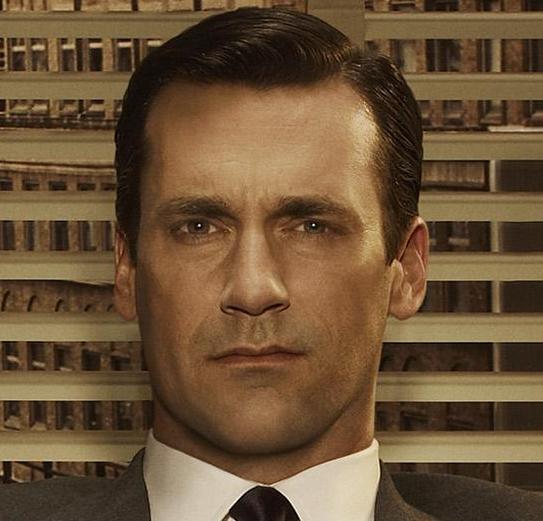
These days there seems to be a man-child backlash, which is good in a lot of ways: as any woman who’s ever tried to play video games online can tell you, the internet is filled with creepy, adolescent-minded adults. On the other hand, you’ve got people holding up Mad Men’s Don Draper as shining example of classic masculinity, and if you’re idolizing Don Draper for being “a real man,” you’re doing life wrong.

Are we even watching the same show?

Still, I think even the most mature person in the world would agree that arrested development can be pretty funny in small doses. This was never clearer than when Bowling For Soup, class clowns of the pop-punk world, hit the charts with “1985.”

Bowling For Soup had a minor hit two years earlier with “The Girl All The Bad Guys Want,” but “1985” (originally performed by heroes of the Splashdown soundtrack, SR-17) is the song they’re best known for. It’s fitting, too;  “1985” tells the story of, a woman obsessed with the pop culture of her youth, and Bowling For Soup are nothing if not pop-culture obsessed. Their songs and their videos are typically a mixture of juvenile humor and obvious cultural references, with the occasional dash of heartbroken against. They are, essentially, a single teenage boy embodied as four adult men.

We found them amusing for a while, but like I said: small doses. The double-shot of humor and nostalgia in “1985” was enough for America, and Bowling For Soup hasn’t had another hit since.

But why? I mean, aside from that thing I said about juvenile humor only being good in small doses. That still stands. But are there other reasons?

Let’s get this out of the way first: most of Bowling For Soup’s albums run for nearly an hour, and that is much, much too long. There are few genres less suited to long running time than pop-punk, and this holds especially true for Bowling For Soup, a band who only knows a few tricks and refuses to learn any more.

Another problem is that the guys Bowling For Soup aren’t that funny. The first single from their follow-up album, The Great Burrito Extortion Case, peaked at 97 on the Billboard Hot 100, which is the pop music equivalent of a polite smile and nod. The song, “High School Never Ends,” certainly didn’t merit much more than that. Yeah, guys, a lot of celebrities can be slotted into stereotypical high school social groups. That’s… that’s a good one. Excuse me, I have to go… uh… do something else.

If “High School Never Ends” was working too hard to stretch a moderately clever observation into a hilarious song, then their next single, “When We Die,” swung way too far in the opposite direction. It was a completely joke-free song that was both saccharine and vague, a deadly combination in a pop song. If the guys behind the song “I’m Gay” want to make me cry, they’d better have a damn good reason.

Bowling For Soup’s best songs struck a balance between sad and funny, wrapping the pop-culture jokes and juvenile humor around some sort of emotional core. “Ohio (Come Back To Texas)” is a single from the same album that spawned “1985”and it holds the dubious honor of being the best Bowling For Soup song ever made. “Ohio” tells the story of a Texan whose girlfriend runs off to Ohio with another guy. The narrator tries to get her to return by appealing to her love of rodeo, Mrs. Baird’s fruit pies and decent Mexican food.

Even if they were never all that funny, at least Bowling For Soup never beat you over the head with their jokes. If a gag fell flat, it’s okay; it was just one line in the song. It’s not like they would pick one abysmally unfunny joke and build the entire song around that, beating the joke into the ground until you weren’t sure if you were even capable of laughter anymore.  Yeah, I’m glad that never happened.

Oh, wait, that did happen, and it was called Sorry For Partyin’.

This cover just screams ” 99 Cent Bin in the back of the FYE.”

You don’t even need to listen to this album to find it annoying. Song titles like “Hooray For Beer,” “I Can’t Stand L.A.” and “I Don’t Wish You Were Dead Anymore” give you a pretty good idea of the level of wit on display here. All you really need to know, though, is that this album contains a song called “My Wena,” and if you’re not sad right now, you haven’t gotten the joke yet. Try saying it with a Boston accent.

That’s the kind of humor that wouldn’t even fly on an elementary school playground. If a ten-year-old heard that song, he would wrinkle his nose, adjust his thick-framed glasses and sigh about the horrible state of music these days.

“I Gotchoo”, a hip-hop influenced song that segues into a rap-metal bridge, is somehow the least terrible song here. For most bands, making a song that borrowed lyrics from the “fuzzy wuzzy was a bear” rhyme would be the low point of their entire career, a moment that they could never live down no matter how many albums they made with Rick Rubin. For Bowling For Soup, it was an album highlight. Honestly, it was just nice to hear a song that didn’t take a single joke and beat it into the ground.

Mercifully, no singles were released from Sorry For Partyin’. The official story is that Jive Records dropped the band right when the album was released, but I believe that there was a greater force at work. A force… for good. I guess you could say that Sorry For Partyin’ restored my faith in a just and loving God. Thanks, Bowling For Soup!

Maybe that’s a little dramatic, but really, that album is terrible. However, while Bowling For Soup has still not returned to the charts, their most recent album, Fishin’ For Woos, shows that the band is capable of producing music that doesn’t inspire bewildered rage.

On Fishin’ For Woos, the band eschews the one-joke songs of their previous album in favor of producing catchy, lightly humorous pop-punk ditties. It looks like there might be hope after all! The boys have learned that they don’t have to make crass, innuendo-laden, “funny” songs in order to entertain people. And hey, even if they’re never going to be Fountains Of Wayne, at least they don’t have to be The Bloodhound Gang.

Remember these guys? No? Good for you!

In fact, the album’s last track, “Graduation Trip,” shows that the band can make a bittersweet song without relying on pop-culture references for the sweetness. The story of “Graduation Trip” is similar to “1985,” with a middle-aged narrator reflecting on a lost love from his youth. Where “1985” devolved into jokes about Ozzy Osbourne, “Graduation Trip” commits to telling the story of someone who can’t let go of the past. The results aren’t exactly mind-blowing, but when you’re dealing with the boys from Bowling For Soup, any steps toward maturity are impressive.

Actually, scratch that–the men from Bowling For Soup. The band members are all in their forties now, they deserve a little respect. And hey, if they want to keep making songs about friends, chicks and guitars, songs like… well, “Friends Chicks Guitars,” more power to them. Because being a man-child might be unattractive, but no one likes a person who takes himself too seriously, either.

Just… lay off the dick jokes, okay, guys?

Before We Cared: Gotye

This is about a week late, but I wrote an article for Forces of Geek about Wally de Backer, better known as Gotye. This is the third time I’ve written one of these articles and actually come out of it liking the artist more, even though Backer’s early solo stuff isn’t my thing.

My heart aches for the young girl who, having survived her sophomore-year breakup only by listening to “Somebody That I Used To Know” on repeat for a week straight, picks up the first two Gotye albums. Starting up Boardface, she expects to hear the soothing voice of Backer over strange yet melodic music. Instead she is greeted with ominous strings, dusty samples, trip-hop beats and distorted vocals. Confused and agitated, she shuts off the record, rips her Gotye poster off the wall and swears to never again fall victim to the charms of an Australian singer-songwriter.

This and other flights of fancy can be found in the article! Read it, if only just so you have another chance to watch that awesome orchestra of “Somebody That I Used To Know” covers. I could have written an entire article about how much I love that thing, and how it uses new media to demonstrate the huge response this song has gotten. It’s a unique and wonderful expression of the world-wide, communal love people have for this song, and world-wide, communal experiences are one of pop music’s greatest functions… at least, that’s how I see it.

That’s What Makes You Beautiful(?)

(Note: I actually wrote this back in March, but it’s just been sitting awkwardly on the Forty Ounce webpage, and I thought it’d make more sense to have it over here. Plus, I still kind of like it. Enjoy!)

So, boy-bands are still a thing. Is that weird to anyone else?

In 2009, a band called V-Factory had a minor hit with the song “Love Struck.” When I heard that song on the radio, I remember thinking, “wow, these guys are about seven years too late.” I thought it was kind of ridiculous. A boy-band, in this day and age? Here? Now? I thought that time was long behind us, and when V-Factory quickly disappeared from the charts–and, I assume, existence–it only reinforced that notion.

But it looks like I was wrong, because now a whole new generation of boy-bands have appeared and if they’re not the cultural sensations that *NYSYNC and the Backstreet Boys were, well, at least people care about them. Sorry, V-Factory. This new wave of boy bands includes groups like The Wanted (who we discussed on the podcast), Big Time Rush (who exist simultaneously as a real band and a fake band on a Nickelodeon show) and OneDirection.

OneDirection has a song out right now, the incredibly catchy “What Makes You Beautiful”. I’d really like to get behind this song, because it’s got a lot of elements I find very appealing in pop music: it’s driven, it’s up-beat, and it has lyrics that are enjoyable in how goofy and kind of bad they are.

So c-come on

You got it wrong

To prove I’m right,

I put it in a song!

First of all: no, no you didn’t. I don’t know who exactly is singing this verse, but I’m fairly sure it’s not one of the swedish guys that actually wrote this song.

Second: does putting something in a song actually make it any more true? If the entire history of gangsta rap is any indication, I’d say the exact opposite is probably more accurate.

Still, those lyrics are kind of charming. But there is another set of lyrics in this song that really give me pause, and these lyrics are especially problematic because they form the basic idea/narrative of the entire song. They form the climax of the song’s chorus and even give the song its name. The lines in question?

You don’t know you’re beautiful,

That’s what makes you beautiful.

Uh… well, I guess the general sentiment of that is sweet. This girl that the narrator is talking to doesn’t realize just how beautiful she is, and he’s giving her a pep-talk. He’s basically telling her that she shouldn’t be so down on herself. He even says that she shouldn’t use make-up, because she doesn’t even need it! Because she’s already so beautiful just being herself! Awwww. What a nice, positive message.

Except it’s not. It’s actually creepy and weird, and makes me think that if the narrator and this girl got together, it would be a really unhealthy relationship. According to the narrator,  this girl is beautiful because she doesn’t know she’s beautiful. But that means that if this girl knew she were beautiful–if she had, you know, some confidence or self-esteem–she wouldn’t be beautiful.

See what I mean? The narrator is ostensibly paying this girl a nice compliment, but he’s also saying that if she ever takes this compliment to heart, he’ll lose interest in her. It’s like the Catch-22 of love songs. And it isn’t like I’m reading too much into the song, closely examining the structure of each sentence and the meaning of each word, looking for an alternative interpretation of what should be an innocent little tune. I’m just reading the lyrics of the song and proceeding logically from them. I honestly don’t think I’m making that big of a jump, either. Anyone who looks at that statement logically should see that what this dude’s saying has a dark subtext.

But… this isn’t a song for people who look at statements logically. This song, like most pop songs, is made for a certain audience, and we must keep this in mind. I am referring, of course, to the Teenage Girl Theory, which states that, in order to appreciate a piece of pop music, you need to look at it from the point of view of its intended audience: a teenage girl. And anyone who went to high school can tell you that the typical teenage girl is not exactly overflowing with self-confidence.

The truth is, this song is targeting an audience made up of awkward and often unhappy young women. And when they hear a song like this, they’re not going to spend time examining the subtext or evaluating the meaning or whatever other stupid thing they had to do in English class that day. They’re going to take it at face value, and considering how downright terrible it can feel to be a teenager, the fantasy of a (presumably dashing and handsome) man telling you how wonderful and special you are has a certain appeal. So, I can’t exactly blame them.

But really, that just makes me more concerned about this song. I don’t want to apply any nefarious or conspiratorial motives to the creators of this song; they probably just set out to make a catchy pop song, and they’ve done that. But do young women really need another piece of entertainment telling them to not value themselves? Especially a piece of entertainment that’s designed to appeal exclusively to them, with catchy, simple melodies being sung by adorable young men?

I don’t think we need to do away with the idea of boy-bands in general… but maybe the world would be better off if we let OneDirection go the way of V-Factory.

The Forty Ounce, Episode 12: The Eschatology of Pitbull (or) We Are Telepathic Now

After almost two months of inactivity, me and Daniel Dockery are back with a new episode of our pop-music podcast.

This time we’re talking about Usher, Cher Lloyd, the Killers, and of course, our favorite little chico/the greatest rapper in the world/Mr. 305/Mr. Worldwide/Possible Prophet/Self-Proclaimed Creator Of The World, Pitbull.

My favorite part of this episode is that Daniel and I both agreed to take something out, but instead I left it in and moved the second take to the end of the podcast. Sorry, Daniel!

Then What Happened: Aaron Carter

I wrote an article about Aaron Carter for Forces of Geek. I watched the entirety of “House of Carters” for research, so don’t tell me that I don’t suffer for my art.

Aaron was popular because he was the cute little brother of one of the Backstreet Boys. If you were a fan of BSB, you were probably closer to Aaron’s age than to Nick’s, so, in a weird way, Aaron was the more approachable of the two. He was just like you! He threw parties and got into trouble with his parents, he fantasized about being really good at sports, he had nation-wide tour with the A-Teens… you know, just normal tween stuff.

Note that I pointedly did not mention that I actually saw Aaron and the A-Teens on that tour. I like to include a personal anecdote in these articles whenever I can, but I do have my dignity.

(also, I did not put together the pictures/captions for this article, which I only point out because the caption beneath that picture of Paris Hilton is kind of weird. everything else is cool, though.)

Before We Cared: Green Day

My new article is up at ForcesofGeek. This time, I’m talking about Green Day and making more jokes about my own life. As these columns go on, I’m getting further and further away from what they were originally supposed to be. Such is life!

So while “real” punk held no sway over me, American Idiot sort of became my religion when it was released in 2005, right as I turned 15.

It’s hard to pin down exactly what about it touched me so deeply: the half-baked political ideas, the never-ending hooks, the recurring characters and musical motifs…  Whatever the reason, I listened to that album at least once a day for over a month. There was a brief but vivid period in my life where the opening chords of “Jesus of Suburbia” were more important to me than any human relationship. Sometimes I would sit by my CD player and just replay the first two minutes of that song over and over again.

You could say I was something of a fan.

Check out the full thing, and decide for yourself if the Jawbreaker reference in the title increases my punk cred or just makes me look stupid.