Music

Tahitian Ambrosia Maker

So, it turns out that the Mountain Goats made music before 2002. Huh! Who would’ve guessed? I mean, I had a feeling that something was going on whenever Peter and Jon would walk offstage halfway through a concert and John would step forward with his guitar, and the gathered masses would begin shouting out what seemed like a random collection of words. “Orange Ball of Hate?” “Going to Queens?” “Family Happiness?” Madness! Surely, these were the ravings of a crowd driven to hysterics by the presence of their prophet. There could be no meaning in such words!

Look, so, the embarrassing truth is that I’m just not that into the lo-fi stuff. My encyclopedic knowledge of the Mountain Goats stretches only as far back as All Hail West Texas ; everything before that is just a daunting, tangled mess in my mind, blanketed in a thick coat of tape-recording sounds. The old EPs, the cassette-only releases, even the proper albums – it’s lot to keep straight, and oh, by the way, most of it sounds like it was recorded onto a cheap boom box, which it was.

And for what it’s worth, I don’t think the songwriting is always that good. Is that alright to say? I know there are people that love this stuff – in fact, I’ve heard that some people prefer it, which is baffling to me. I’m no stranger to nostalgia, and I can only imagine how strong your bond to a musician would feel if you discovered their work when they were releasing mail-order cassette tapes through no-name California indie labels. But do you really want to throw Hot Garden Stomp up against anything from Beat The Champ? Huh? Is that you what you want to do, imaginary person?

I’m stalling. But only because I have no idea what to say about “Tahitian Ambrosia Maker” off of the Sweden album. Several sources tell me that Sweden is a “song cycle,” but like a lot of Darnielle’s early output, it sounds to me like a bunch of songs about an unhappy couple that are basically just first drafts for Tallahassee – and yes, I know that a lot of those songs are literally about the couple from Tallahassee, I’m just making a point.

Maybe I just don’t get it. Could that be what it is? I know Darnielle wrote a lot of songs back then that were basically just a delivery system for a punch line – or as humans call them, “jokes.” This song appears to be about two people lying around in a tropical climate–possibly hung-over, though that might just be me viewing them through the prism of the Alpha Couple—when one of them produces a half-loaf of bread and the other experiences a moment of intense spiritual re-awakening. Boy, when I write it out like that, it actually sounds pretty funny. I mean, it’s no “Golden Boy,” but it’s alright.

Part of the problem here is that I learned to love the Mountain Goats through the post-Tallahassee albums, so the lyrical style of the early stuff, coupled the sonic sameness of the lo-fi recording process–it’s just not a language that I understand. While there is a lazy part of me that hopes I’ll get nothing but studio tracks on the randomizer from hereon out, I do want more opportunities to think and write about the boom box era. If so many people love it—and if it was written by the same guy who wrote “The Ballad of Bull Ramos”—it’s got to be at least pretty great.

Also: I just had an awful vision of myself looking back on this entry thirty days from now and being so embarrassed that I delete it, so embarrassed that I delete this whole website, salt the earth and put up a Google.com re-direct where my front page used to be.
Dilaudid

I feel uncomfortable listening to The Sunset Tree, so uncomfortable that I hardly ever do it.

It’s not because it’s a bad album; the writing is evocative and the musical arrangements are a giant leap forward from the previous two Mountain Goats records. And it’s not because I have some obnoxious, hipster-ish affectation about how many people love “This Year”—it’s a fantastic song, of course people love it—though I would forgive you for thinking that, I am certainly not above the occasional obnoxious affectation.

As you probably know if you’ve ever even heard of The Mountain Goats, The Sunset Tree is an autobiographical album based on John Darnielle’s adolescence, particularly the abuse he suffered at the hands of his step-father. It covers themes that are universal to many people’s youth—feelings of helplessness, depression, frustrated anger. But the specific trauma that Darnielle endured is baked right into the album, and you can’t engage with the songs on any level without addressing it.

Can I get real for a minute, here?

I draw a lot of emotional strength from listening to The Mountain Goats. Even though many of the characters in their songs are living under conditions I can’t imagine, the ways they cope with these conditions are intensely relatable to me. But when I listen to Sunset Tree, I feel like I’m tapping into a deep vein of something that doesn’t belong to me. Maybe it’s the knowledge that Darnielle lived through these things, these exact things—or maybe it’s the knowledge that a lot of Mountain Goats fans came to the band through this album, and this album has a powerful, powerful meaning to those people, a healing light so clear and pure that I have to shut my mouth and turn away during concerts when Darnielle sings “Hast Thou Considered the Tetrapod,” because I feel like my very presence might cheapen it, somehow.

What I’m trying to say here is that this album isn’t for me. It’s for all the people Darnielle addressed in his “total victory” tweets from New Year’s Eve three years ago. And that’s an amazing beautiful thing that he has given those people, a thing that belongs wholly to them.

But it’s not quite that simple, right? Because like Darnielle says in that first tweet, he tries to talk to everybody all of the time. I can’t pretend to know why another person makes the art that they make, but I do know that Darnielle didn’t just lay his pain bare on The Sunset Tree so that we could stare blankly at it — he gave us a way in.

“Dilaudid” is a highly potent derivative of morphine – exactly the kind of drug you would take if you were trying to escape an unimaginably bleak home life. Twenty minutes ago, I did not know this, and I probably would have told you that a dilaudid was a type of flower or something. While the song “Dilaudid” is based on a period of time where Darnielle was doing heavy drugs and having lots of sex—two things that were not part of my teenage routine—what it sounds like is the reckless abandon of youth, a highly relatable subject for anyone who’s ever felt the darkness of the future opening up underneath them and tried to outrun it.

The repeated refrain of “kiss me with your mouth open” is about as naked and emotional a plea as a person can make, and when you hear that stark and foreboding cello riff that runs underneath it, the song’s only piece of instrumentation, you understand the fear and lust that are driving the narrator to make that plea, and you understand why Darnielle screams the way he does at the very end.

And once you understand that, you’ve got your way in. And you’ve got a shot at glimpsing a small sliver of something you otherwise couldn’t begin to understand.

Blues In Dallas


I am far from where we live,

And I have not learned how to forgive

But I will wait

I will wait

I will wait

The subject of waiting comes up a lot in John Darnielle’s catalogue. Often, the characters in these songs are waiting for a moment of transformation, whether it’s the narrator of “Hast Thou Considered The Tetrapod” longing for the day he can escape his abusive step-father, or the profoundly damaged narrator of “White Cedar” and his zealous belief that he might someday be free of his own mental illness. Whether or not they ever receive the blessing they’re waiting for is usually beside the point – even though the kid in “Tetrapod” leaves his dysfunctional home and outlives his abuser, while the guy in “White Cedar” is almost certainly never going to get better, they’re both drawn with the same sympathy Darnielle affords all of his creations.

That same sympathy extends to characters who are waiting for something bad – the roomful of people anxiously awaiting a potential disaster in “In The Craters On The Moon” abide diligently to a strict code of behavior, even if it doesn’t seem to be doing them any good. The guilty man hiding from his neighbors in “If You See Light” might think of himself as a monster, but he gets in a few good shots at the nosey interlopers that dare to pass judgment on him. Even the person in “Black Pear Tree,” staring up at the sky waiting for a storm that never comes, still has some faith they will emerge unscathed from whatever ambiguous darkness has gathered over their heads.

Whether they’re stuck in a holding pattern of misery or white-knuckling the last bit of hope they have left, the characters in these songs are portrayed in a noble light. Waiting becomes an almost heroic act, not because the thing they’re waiting for is morally pure or righteous, but because the act itself requires a spectacular show of human strength and will.

… and then you have the narrator of “Blues In Dallas,” a guy holding a grudge so deep in his heart he expects it to endure past the seventh trumpet of the Apocalypse, a guy with some real violent thoughts in his head and an unhealthy fixation on the place where John F. Kennedy was shot. Sung by Darnielle in a sleepy, menacing drone over a buzzing keyboard and a unceasing, tinny drum-machine, this song has none of the painful longing that marks his other songs about waiting. This one is dingy, unglamorous, unromantic; a song about waiting for a day that will never come and wouldn’t make you happy even if it did.

But there’s that tiny lilt in Darnielle’s voice at the end of the last verse when he sings “I will wait.” And then there’s that little bit of ambiguity in the narrator’s final refrain of devotion – is there a chance that he’s pledging his soul not to revenge, but to the belief that he might still learn how to forgive the person who wronged him?

Or is he just… waiting?


(hey everyone! i’m going to be writing about a different mountain goats song every day this month. all the songs will be picked randomly by the ‘shuffle’ function on my itunes  player – unless i get like five tracks in a row from ‘Taboo VI’, in which case i might have to take matters into my own hands. i don’t really need a theme/gimmick to spend all my time thinking about The Mountain Goats, but the ‘official’ name of this series is ‘march sadness’ because it’s march and i’m a funny guy, ha-ha ha-ha)

Dispatches From The Mainstream: “Real and True”

I’m afraid that the currents of pop music are too vast and weird for me to comprehend, dear reader, because this has to be the most random three artists I have ever seen assembled together on one song.

Let’s start with Miley, since she’s pretty much naked in this video and I’m afraid that’s all people are going to take away from it. Less than six months ago, having Miley turn up in a song like this, dressed the way she is, would have been unthinkable. Die-hards (and people with too much time on their hands) would have known from the ominous tone and caged-bird imagery of “Can’t Be Tamed” that a new Miley was on the way, but it was a huge jump from the pole-dancing hullabaloo of “Party in the U.S.A.” (“You guys don’t think that Hannah Montana might be a sexual being, do you? No, me neither, that would drastically undermine my understanding of the world”) to “We Can’t Stop” and the madness of the accompanying VMAs performance, from which we as a nation are just beginning to recover.

Mr. Hudson is a long-time favorite of mine, but since most people know him as “that guy from Jay-Z’s worst song,” I’ll do a quick recap: Mr. Hudson made a lovely and intelligent indie-pop record in 2007, got discovered by Kanye West, who helped Hudson make his shiny-but-uneven follow-up Straight No Chaser, which left him in the awkward position of a guy who desperately tried to be a big-name pop star and failed. Since then, he’s languished in the background of Kanye’s G.O.O.D. Music label, formed the hyperactive BIGkids side-project with Rosie Bones and… now he’s singing about entropy on a song with Future.

Future is perpetually living 2008 by way Kanye West and Lil Wayne at the same time. He never steps away from Auto-Tune, even when he’s rapping, but he doesn’t just use it to express emotion—though he does plenty of that. His constant vocal modification is just part of the loveable and all-encompassing weirdness that brings to mind a time when Lil Wayne wasn’t a stand-in for everything wrong with Hip-Hop; he was actually the underdog. Future’s lyrical ability is nowhere near Wayne at his peak, but his melodic sensibility is the real draw, and even when he throws out a real clunker of a verse, there’s usually something endearing about it.

real and true 2

They’ve really got their best guys on this mission, huh?

Despite his open embrace of tenderness and vulnerability, “Real and True” is the furthest Future has ventured into pure ballad territory. The beat is sparse and piano centric, but the main instrument is Future’s voice, which runs through the background of the entire song. You wouldn’t think that a highly processed series of moans could lend a song this sort of melancholy feel, but there it is.

His delivery in the first verse—where he pays himself and his beau a series of compliments in a second person perspective—is close to rapping, but his next verse is straight-up singing. And if Future has trouble writing coherent rap verses, his songwriting game is all over the place.

Still, as fun as it is to watch Future goofily grin in the video as he says things of himself that no one has ever said or ever will say, there’s something genuinely affecting about the final verse. You’ll rarely find a rapper being this nakedly emotional or spouting a full-fledged endorsement of commitment. And even if the three lines that follow sound like they came from three separate songs, well, they’re still nice.

I could never be scared of commitment

I can prevail through life without bein’ malicious

I can’t hold you full responsible for your mischief

I hope you are never huntin’ me with vengeance

I mean, that’s a cool sentiment, right? That you can succeed in life without actively harming others. And I don’t really know whom he’s addressing in that last line, but hey, I get it. I hope no one ever hunts me with vengeance either, Future.

Oh, Miley Cyrus is on this song, right? I guess we should talk about that some more. But do you really need someone else’s opinion on Ms. Cyrus? I don’t want to delve into the cultural discussion surrounding her new identity, but I would like to say that Halloween was three weeks ago, so it might be time to take off the Rihanna costume.

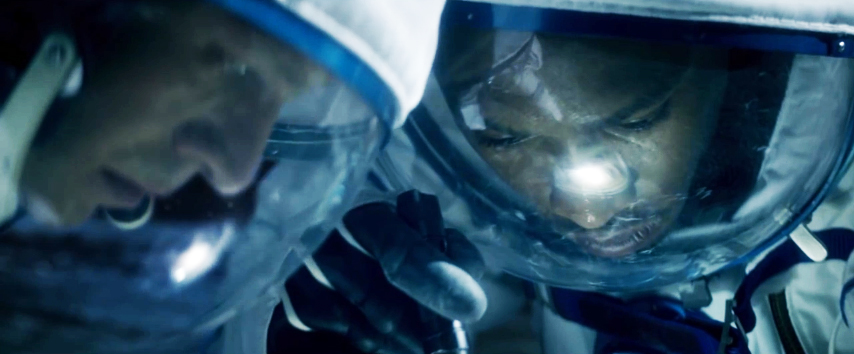
Mr. Hudson sounds great belting out the chorus, and I hope this song catches on, because I’d love a new album from him. Until then, I GUESS I’ll settle for this intergalactic sci-fi epic where he teams up with Future to rescue lost astronaut Miley Cyrus who has turned into a glitter person with the power of teleportation. Beggars can’t be choosers.

Dispatches From The Mainstream: 7/22/2013

dispatchesjuly

Avril Lavigne – Here’s To Never Growing Up

Don’t-give-a-whaaat Ke$ha-style partying by way of Taylor Swift’s pseudo-countrified pop. Is this what it’s come to? I thought you were better than this, Avril! Actually, no, I didn’t, but seeing someone clinging to relevancy this desperately is sad, unless it’s someone truly heinous, which Lavigne never was. Did you know she’s 28? I’m not saying that to make you feel old—she’s too old to sell this kind of bubblegum and too young to get any pathos from the concept. It’s not surprising that she’s chose this path: while most of her music is general adult contemporary, “Girlfriend” is her biggest and brattiest song. Never growing up isn’t so much a lifestyle for Lavigne as it is a marketing ploy.

But the real issue here is that name-drop at the front of the chorus. What Radiohead song do you know that’s suitable to be sang at the top of your lungs? Ms. Perry’s “The One Who Got Away” raised similar questions last year, but Lavigne throws hers right into the refrain and forces you to really grapple with it. Which Radiohead album are these ladies listening to? Is “Street Spirit (Fade Out)” appropriate music for a Mustang make-out session? Is it even possible to sing “Kid A” at the volume Lavigne suggests? I have more questions than answers, obviously.

David Guetta – Play Hard (feat. Akon & Ne-Yo)

EDM is the musical equivalent of empty calories, but even by the standards of modern dance music, David Guetta’s work is dumb with a capital ‘d’. Moreso than Calvin Harris, David Guetta’s music is derivative and comically unsubtle, and some accuse Harris of making the same song over and over again, at least he’s doing it without ripping off Afrojack. Although, D. Guetta and Afrojack have a working relationship, so… maybe Mr. Jack is cool with it?

I don’t want Guetta to be a plagiarist because despite his obvious flaws and the role he played in transforming the charts into an across-the-board synth-fueled bacchanalia, I like his music. It’s big and loud and you can jog to it, and on occasion, it’s fantastic. (See: “Without You”). “Play Hard” doesn’t have a lot going for it aside from that famous synth line in the chorus, but at least this time Guetta credited the original artist.

“Play Hard” is dull—Akon can really suck the energy out of a verse, huh?—but it’s worth a listen just to hear the sound of pop music eating itself in some kind of substance-free Ouroboros scenario. “Better Off Alone” came from a different time, when electronic music was a rarity on the charts, sung by unknowns. Now it’s everywhere, with big-name artists of all genres ready and willing to jump on the train. Alice DeeJay is remembered fondly for their one big song; when David Guetta finally runs out of steam (around the time he samples the chorus from “Castles In The Sky”), he’ll be looked back on with exhaustion and annoyance. Alas, the perils of success.

Capital Cities – Safe And Sound

Here’s the argument against Guetta-style hedomism. This falls somewhere between “alternative” and “dance,” but wherever you place it, “Safe And Sound” is a great reminder that the synthesizer has more settings than “hedonism.” Even in pop music, it doesn’t have to be all build-up and release. Electronic sounds can be more soothing and inviting than a six-string if you use them right.

It would feel a little silly to call this minimalism, but it’s simple, for sure. All I can make out is a synth, a drum machine, a horn, and two guys singing—maybe a little guitar on the bridge, but only for accent. And it works! So much Top 40 is overstuffed to the point where you can’t identify the individual instruments, so it’s nice to hear something this basic.

It’s a bit repetitive and there’s one real groaner of a lyric—“hurricane of frowns”—but the message of the song is so uplifting that it feels more like a mantra, something you chant in order to encourage positive thoughts. The music just goes along with that: the synth line is warm and smooth, and the horn, oh, the horn. The horn is the great under-used instrument of modern pop music. It’s almost cheap how easily a horn signifies triumph, hopefulness or just sheer exuberance, but it’s used so sparingly in “Capital Cities” for what a major part of the song it is. I say we give them a pass. In fact, I say we give everyone a pass. Let’s throw a horn into every pop song we can until we’re all sick of it.

Dispatches from the Mainstream, 3/15/2013

dispatchesmarch15

Justin Bieber – Beauty And A Beat (feat. Nicki Minaj)

Justin Bieber: human meme. YouTube comments punching bag. Fixation of ironic alt-lit poets. This enigmatic figure known as “the Biebs” has loomed large in our culture for years now, but I’d wager that most people who make jokes about Justin—ie, lazy comedians and jerks—probably never heard one of his songs. Now, the freedom to dismiss things with no basis in fact or personal experience is your right as an American, but maybe we shouldn’t make it a habit to disparage a sixteen-year-old boy just because he’s effeminate and has money.

Anyway, “Boyfriend” marked something of a turning point: people started actually listening to Bieber’s music, and it seems like we all collectively decided that yeah, he was alright. There are still a few troglodytes holding Bieber up as an example of “how modern music is terrible” but we need to ignore those people until they wither away and die or just until they find a new pop star to hate. Hey, have you guys heard of Austin Mahone?

One thing that may have helped Bieber out is, well, puberty. He had the pleasant voice of a choirboy when he first showed up, and unfortunately, he had the charisma to match. These days, he’s at least learned to project a little personality, which helps him out a lot on “Beauty And A Beat”. The song is pretty generic modern-day R&B, dubstep breaks and all, enough that you might think any other singer would fit just as well. But you need someone with an air of innocence in order for these lyrics to work. “Body rock,” “party like it’s 3012”, even the titular line—a play on “Beauty & The Beast” that doesn’t make any sense—would be unforgivable clunkers on a Justin Timberlake record. Hell, they would even stick out on a Trey Songz record.

Nicki Minaj, who also lives on the razor’s edge between real person and living joke, does fine here, though her verse is most notable for the uncomfortable line about drugging Bieber and having sex with him when his girlfriend isn’t around. Just look at how awkward that moment is in the video. Oh, the video is fun, too. The found-footage conceit is silly, but the pseudo-handheld look really works. It’s almost like you’re actually there, partying with the Biebs himself! Gee, wouldn’t that be nice? Actually hanging out with Justin Bieber? Siiiiiiiigh.

Wait, what were talking about? 

Nicki Minaj – The Boys (feat. Cassie)

Speaking of Ms. Minaj, a few months ago she dropped her best song since  “Super Bass.” Minaj has a unique position in pop music, partially because she markets herself as a singer as much as she does a rapper. I don’t mind her actual singing—it’s the definition of serviceable—but I’m disappointed whenever she drops a single that neglects her rapping abilities. Minaj is wasted on slick dance numbers like “Starships” or “Pound The Alarm”. Give her something she can really sink her teeth into and she’ll usually impress. The beat on “The Boys” is perfectly suited to her aesthetic—booming, clacking, but with a bit of weirdness in the form of a bee-like synth squeaking around in the background.

The chorus is unique: Cassie’s dead-eyed and robotic delivery gives way to Nicki’s whining rap (and what appears to be a “Technologic” reference), until the whole beat drops out and is replaced by a gentle acoustic guitar that sounds like it’s from a whole different song—which it is—and Cassie gently croons one of the most sarcastic hooks in recent rap history. Then we’re right back at Nicki’s frantic rapping, which gets pitch-shifted for the double-time final verse but mostly stands on its own without even a single bit of hash-tag rap. A Nicki Minaj verse with punch lines that aren’t delivered after an awkward pause? Yep, believe it, it’s happening. She just came through with the Six, like her name was Blossom! What! I don’t even GET that reference!

But this is more than just a good rap song: this single holds the potential to revive Cassie’s career. I don’t know what happened to her after “Me & U,” but I hope this isn’t the last we’ve seen of her. I mean, how cool does she look in this video? Can she just be back now? Can we do that? Attention world: bring back Cassie. Specifically, bring back the deeply bitter, blazer-wearing Cassie with dyed, slicked-back hair. That would be just great.

Lil Wayne – Love Me (feat. Future & Drake)

Enough girl power–let’s move onto some really uncomfortable misogyny.

The video is required viewing for this discussion, because without it, all we’ve got is late-period Lil Wayne killing time between skateboarding sessions over a synth-based Mike WiLL made it beat. The only interesting part of this song is the all-too-brief appearance by Future, who still has the sort of “lovable oddball” energy that Wayne had years ago. Lyrically, we’ve got your typical anti-woman hip-hop tropes: we’ve got good bitches and bad bitches, and we only care about these women until we’re done having sex with them. Of course, it’s not our fault, no: we simply can’t treat these hoes like ladies; they’ve had way too much sex for that. I mean, what are they thinking?

But the video really elevates (lowers?) the experience to a higher level of objectification. Plenty of rap videos feature women as unspeaking symbols of success and sexual ability, but how many rap videos literally turn the women into animals and put them in cages? The whole theme of the video is vaguely occult—at least enough to bait some Illuminati conspiracy theorists—but it’s not coherent enough to even offer an explanation for why the women are all Dr. Moreau-esque abominations. But this is a rap video, so we don’t really need an explanation, and isn’t that sad? An artist in a different field could actually lose their career over something as tacky as this.

I usually deflect criticisms of violence and sexism in rap by comparing the genre to a good crime movie: you enjoy the abhorrent content not for its own sake, but because of the presentation. I don’t like Reservoir Dogs because a guy gets his ear chopped off, I like it because a guy get his ear chopped off while the villain dances around to a peppy Dylan-esque pop song. Lil Wayne used to be like those guys who make the Crank movies: distilling a whole genre down to a few bizarre images and spitting them out at a blinding speed. These days, Lil Wayne is more like Gerard Butler: appearing in a series of dull projects that present sex and violence in such a variety of bland and awful ways that you just feel gross when it’s all over.

Dispatches From The Mainstream: 2/26/2013

Austin Mahone feat. Flo Rida – “Say You’re Just A Friend”

Newcomer Austin Mahone is the latest artist to build a song around an interpolation of Biz Markie’s greatest contribution to pop culture, and even though it comes out as 100% cooke-cutter Top 40, “Say You’re Just A Friend” gets a pass for the huge nostalgia buzz it gives me. Not because of Biz Markie—man, I wasn’t even born until 1989—but because “Just A Friend” by Mario was a hit when I was twelve years old and just getting into pop music. Most things that remind me of the seventh grade send me spiraling into self-doubt and confusion, so that should give you an idea of how much I liked that song.

But the real noteworthy part of this song is Flo-Rida, who continues his transition from rapper to singer with a guest verse that relies more on melody than lyrics. His work here is closer to rapping than his section of “Troublemaker,” but the melody is too prominent to be ignored. Hey, do you think people will buy it if I start referring to Flo-Rida as a “one-man Bone Thugs-N-Harmony?” Probably not, right?

Lyrically, this might be some of Flo-Rida’s best work ever. He plays the Ludacris to Mahone’s Bieber, reminiscing about a young love that went sour. When has Flo-Rida ever sounded this relatable? Even when he’s listing off a bunch of his singles, it comes off as genuine enthusiasm rather than self-aggrandizing. Maybe that Biz Markie interpolation just makes anyone seem charming.

Another thing: I don’t want to be mean to Mr. Mahone, because dude is only sixteen, but I think he and Flo-Rida are about on the same level of singing ability. It sure sounds like they’re equally reliant on auto-tune.

Will.I.Am feat. Britney Spears, Diddy, Hit-Boy, Lil-Wayne & Waka Flocka Flame – Scream and Shout (Remix)

Right, because the original wasn’t awful enough, why don’t we make it longer and even less fun? “Scream and Shout” was a club song that failed on every conceivable level: not only did the low-key, repetitive music have zero chance of getting anyone on the dance floor; it makes being in the club sound dull and irritating. That’s an accurate impression of my clubbing experiences, but I doubt it’s what they were going for. And now the official remix is out and I had trouble getting through even two listens of this six-minute song. That’s twelve minutes that I could have used to watch an episode of Adventure Time or go on Tumblr or listen to this one Morrissey song I’m really into five more times. A little gratitude would be nice, that’s all I’m saying.

Will.I.Am’s post-2008 musical output is across-the-board annoying, but it can sometimes be interesting to hear him try to shift pop-music towards low-fi chiptune. Anyone who remembers “The Hardest Ever” knows that it’s never interesting to hear him rap, and the fact that he gave himself such a prominent verse in this remix feels like a straight-up insult. I don’t know which part is more annoying: the blatant plug for his tacky iPhone add-on IAm Foto Sosho or his drastic misapplication of the term “rock ‘n roll.”

How does everyone else do? Even though he’s a thousand miles from his sonic home-turf, Flocka gets the best verse by far, and that’s coming from a late-period Lil Wayne apologist. Yeah, he’s been on auto-pilot ever since he got out of prison, and his verse here adds to our dangerous national surplus of “All Eyes On Me” references, but you can almost catch a glimpse of that old-school Wayne charm. If you squint.

Hit-Boy uses up the only semi-clever line he’s ever going to have, so I hope it was worth it, and Diddy’s contribution is laughable where it’s supposed to be exciting. His hype-man persona is surprisingly awful for someone who’s done little beside hype people up for decades. No one has ever made me want to “turn up” less. And then he ends the song by repeating the phrase “This is a super black man remix” over and over. I don’t know, man, this whole thing’s just a mess.

Maroon 5 – Daylight

Maroon 5 is going through a lot of trouble to distract you from the fact that “Daylight” is a dull song, musically listless and lyrically far too reminiscent of “Save Tonight” by Eagle-Eye Cherry. And I hate to admit it, but they’re doing a bang-up job.

The version that the band put together with the reliably awesome Playing For Change is especially successful at tricking you into enjoying a Maroon 5 song. Their best decision is keeping Adam Levine and his whiny voice off-stage for a full minute, and their worst decision is bringing the whole band in for the rest of the song. It’s not enough to totally ruin the song, but I do flinch whenever the video cuts from someone doing their thing with a cello or a didgeridoo to some cell-phone quality footage of those doofuses playing in a crowded arena.

The nine-minute “Daylight Project” version is less of a musical achievement, but anyone interested in seeing a cross-section of humanity represented through vlog should check it out. The breadth of the human experience this video contains is limited by the fact that it’s made up of Maroon 5 fans (a demographic that tends towards the young and female), but it’s still a fascinating glimpse into the lives behind the fandom. This song is a bizarre fit for the two world-spanning videos propping it up, but if you can ignore the extra-long instrumental playing behind this version, you’d be stupid not to be just a little moved.

And since it’s been a while since I reminded everyone what a mushy, emotional wuss I am, I’ll just say that I got choked up at what happens at 7:48.

Dispatches From The Mainstream: 2/15/2013

Kelly Clarkson – Catch My Breath

Kelly Clarkson is weirdly likeable. We should be resistant to her, because her entire career is non-organic and extremely forced. But I guess we love her because we picked her. You might even say that Kelly Clarkson is the last thing our country agreed on. The very next season of American Idol was beset with controversy about homophobia and missing votes. And even when someone actually does win American Idol these days, do we give them a career? Sometimes we do, but sometimes we end up with Taylor Hicks. Yeah, I said it.

I like Kelly Clarkson so much that I’m disappointed in myself whenever I don’t enjoy her current single, but I couldn’t stand “Stronger (What Doesn’t Kill You).” I’m no minimalist, but that junk was too noisy. The chorus was like the inside of a car factory. That entire album was kind of wash for singles, really: “Mr. Know It All” was a slightly less annoying version of “Just The Way You Are” by Bruno Mars–but only slightly–and do you even remember “Dark Side?” I do, and I’m not too happy about it. I guess that was Kelly’s “unlistenable, non-catchy chorus” phase.

“Catchy My Breath” succeeds by dialing it back a little bit: “Stronger” was exhausting before the first verse even started, but this song uses a repetitive melody to great effect. The construction of the chorus is great, too: it’s simple and it gives Clarkson a chance to show off her fantastic voice. “Catch My Breath” also has that same life-affirming, in-your-face, no-screw-YOU power that “Stronger” had, but with a wider appeal—hey, people who aren’t escaping a toxic relationship need anthems, too! Just sayin’.

Rihanna feat. Future – Loveeeeeee Song

Rihanna’s music has always had a streak of unsentimental iciness. Maybe it’s because her voice doesn’t allow her to sound truly nurturing or emotional or any other stuff that codes as “feminine,” but there’s always been an air of hardness about her. Then in 2009 she went through some seriously bad stuff and put out Rated R, an album that channeled the darkness of her life into some of the most aggressive music ever to be put out by a pop diva. There aren’t a lot of MALE R&B stars that make music that aggressive.

Since then she’s gone back and forth between “dark” Rihanna and a more conventionally “feminine” role, ping-ponging between the two several times over the course of a single album. For example, “We Found Love” & “You da One” appeared on the same disc as “Talk That Talk,” “Cockiness” and—ugh—“Birthday Cake”. Unapologetic is no different, opening up with the aggressive and sonically unpleasant “Phresh Out The Runway,” switching back to love-struck-Rihanna for “Diamonds” then whipping around to “Pour It Up,” which sounds like it was pitched to about twenty different male artists before Rihanna snatched it up. Put it this way: when a female singer is talking about “strippers going up and down that pole,” you are dealing with some binary-breaking business.

“Loveeeeeee Song” is a more subtle inversion of gender norms than “Pour It Up,” but it’s more interesting because it pairs the a-typically aggressive Rihanna with Future, a rapper best known for his love of autotune and his unusual sensitivity. On the hook, Future pleads openly for “love and affection” without a hint of bravado or ego. In the verses, Rihanna plays a more guarded role, tossing out sexy come-ons and promising to “lay you down.” Not only is it one of the few listenable songs on Unapologetic, it’s a noteworthy pop song. Not because of how unusual it is, but because of how close it is to a normal Top-40 duet between a man and a woman. All Rihanna and Future did was trade places.

The Band Perry – “Better Dig Two”

I haven’t checked in with The Band Perry since “If I Die Young,” a song that was so poorly written I had trouble believing that the writer was almost 30 years old. Kimberly Perry is the first adult woman I’ve known whose death fantasies can rival those of a teenage LiveJournal user. Especially annoying was the winking bridge, with the lyrics, “maybe then you’ll hear the songs I’ve been singing/funny when you’re dead, how people start listening.” Not only is that a remarkably dull observation, it sounds like it belongs in a totally different song.

“Better Dig Two” wasn’t written by any of the band-members Perry, but it sure fits their lyrical style, right down to the fixation on white wedding dresses as a symbol of purity. The title and the music promise a much darker story than what we get–to me, it harkens back to that scene in A Fistful of Dollars when Clint Eastwood tells the guy how many coffins to build. So cool. Anyway, the chorus of “Better Dig Two” describes a woman who would rather die than go on living without her husband… but then the verses hint at a darker meaning to the titular phrase. She vaguely threatens to either kill herself or kill herself and her husband, which would be an interesting direction to go in if the song could just commit to it.

Other crimes include use of the contraction “I is”—as in, “I’s gonna love you till I’s dead”—and a jarring reference to meth in the middle of a song that otherwise sounds like it was written sixty years ago. The music is a step-up from “If I Die Young”, with handclaps and creepy banjo on the verses, and those electric guitars that take us right back into pop-country territory aren’t totally unwelcome. This is a muddled song that could be a fun little bit of darkness if the lyrics had gotten a second draft.

Dispatches From The Mainstream: 1/16/2013

Ludacris feat. Usher & David Guetta – Rest of My Life

Is someone trying to turn Ludacris into Pitbull? Because “Rest of My Life” is basically a remake of “Give Me Everything”—complete with the rallying cry of partying as a life-affirming act—with Usher standing in for Ne-Yo and the original breadwinner for D.T.P. in the place of Mr. Worldwide.

I’m not even complaining, really. Ludacris has enough personality in his voice alone to still be fun in the measly eight-line verses that Pitbull has restricted himself to, and a team-up with Usher is always welcome if just to hear Ludacris call him “Ursher.” A David Guetta-produced “here’s to life”-anthem just seems like an odd fit for a guy who once released an album called Chicken-n-Beer and whose two best songs are about getting into fights for no reason. Then again, one of Luda’s biggest hits was the uncharacteristically dramatic “Runaway Love,” so I guess most people are just looking for a different version of Ludacris than I am.

Whether this song is a case of executive meddling—entirely possible, as Luda’s recent singles have not been charting well—or just an artist exploring his secret love of European dance music, it’s not that bad. There’s a lot of fun to be had in the friction between Luda’s low-brow “Women, Weed and Alcohol”-based persona and D. Guetta’s unabashed pursuit of epic highs . The music video is especially bizarre, since Luda’s videos have historically been a little less “slow motion, emerging from the smoke” and a little more “giant cartoon hands” and “Austin Powers homage”. It’s a fun kind of bizarre, but I hope that Luda’s next single has a little more Luda.

Olly Murs feat. Flo-Rida – Troublemaker

Olly Murs is fine. He made a nice little career for himself in the UK before breaking through in America with “Heart Skips A Beat.” His only crime so far has been inadvertently tricking me into listening to Chiddy Bang. But I don’t want to talk about Olly Murs, I want to talk about Flo-Rida.

I don’t know if Flo-Rida has ever enjoyed rapping. The best things about his songs have always been the beat and the chorus. The chorus usually features a guest artist, but the weird thing is, Flo-Rida sings along with the chorus. He’s been doing it since “Low,” and while that sort of thing isn’t unusual for a singer, it’s kind of weird for a rapper. It’s there, though, if you listen closely: somewhere in the mix of every Flo-Rida chorus is the man himself, drenched in auto-tune and wailing along with whatever pop star/sample he’s built his song around.

Even in what we’ll charitably call Flo-Rida’s “lyrics,” the actual words have always taken a backseat to the rhythm he delivers them in. “Club Can’t Handle Me” is a fantastic song, but Flo’s verses are only good in the way they enhance the beat underneath. Then there are catastrophes like “I Cry,” which veers between condescending and disrespectful. Oh, really, Flo? The mass shooting in Norway made your whole day go sour? That’s rough, buddy. Not to mention the bridge: “When I need a healing, I just look up to the ceiling/I see the sun coming down, I know it’s all better now.” Flo is (probably) trying to tell us that his faith helps him through hard times, but it’s like he doesn’t know quite how to put the words together to form a coherent thought.

And now, in Troublemaker, Flo-Rida abandons rapping entirely. He’s just singing. It’s not as out-of-place as it would be if he featured on a rap song, but it’s still strange that he doesn’t even pretend to do the thing he was hired to do. Thing is, it’s not actually a bad bridge, even if it falls apart on close inspection: Flo, that’s not what Wyclef Jean was talking about when he said he would be gone ‘till November. It turned out better than it would have if he had tried to rap.

At this point, Flo needs to fully commit. He should go full-on 808s And Heartbreak (or, let’s be honest, full-on Rebirth) and just do an album full of straight singing. The vocals may be processed into oblivion, but at least it’ll be catchy… though the lyrics probably won’t make sense.

OneDirection – Little Things

In the morally deficient world of the “pickup artist” there’s this thing called “negging,” which basically means insulting a girl in order to lower her defenses, leaving her vulnerable to your lame, gross advances. The way I understand it, an effective neg has to be part of a longer, less overtly creepy conversation. After all, just walking up to a woman and insulting her isn’t going to get you anywhere; you have to at least say something nice so that she’ll have a reason to keep paying attention to you. Anyway, that’s what I think is happening in the new OneDirection song.

I’ve complained before about the darker side of OneDirection, and I understand that I’m being a little sensitive, but here’s the thing with boy bands: their songs are made to appeal to teenage girls. It’s different from a genre like hip-hop, which is highly problematic and often attracts a young audience, but at least isn’t built from the top-down to appeal to 12-year-olds. When you listen to the lyrics of an OneDirection song, you need to hear them the way a young girl would hear them.

And yeah, I get it: most girls are going to listen to this song and take it the way it was meant to be taken, as a proclamation of devotion in which the smaller, flawed things about a person are part of what make them special. I’m not against that in theory, but some of the things that the song singles out—“You still have to squeeze into your jeans”—seem less like little quirks and more like things that a guy points out to make his target feel self-conscious. Not letting your girlfriend know that she talks in her sleep isn’t cute, it’s actually kind of creepy. The worst part is the bridge. “You’ll never love yourself half as much as I love you”, like the chorus of “What Make You Beautiful”, is only sweet on the surface.  It suggests that if the girl ever gained any self-worth, the guy would split. It’s about 5% adorable and 95% manipulative. In fact, that pretty much sums up the entire band.

Dispatches From The Mainstream: 12/11/2012

Bruno Mars – “Locked Out Of Heaven”

Sometimes Bruno Mars is not terrible. It used to be, that time only came once a year at the Grammys. Two years in a row, Bruno Mars has taken the stage at the Grammy Awards and performed stylish, retro and totally enjoyable versions of his dull, boring songs. It started with the doo-wop version of “Grenade” from 2011 (complete with all-male back-up singers) and continued in 2012 with a surprisingly rocking version of “Runaway Baby.” Unlike his debut album, Doo-Wops and Hooligans, which featured no doo-wop and very few hooligans, these performances revealed a Bruno Mars who was obsessed with the musical and visual style of eras gone by. I kept waiting for this version of the singer–who I think of as “Good Bruno” or G.B. for short–to emerge in his studio work, but aside from a co-writing credit on Cee-Lo Green’s irresistible “Fuck You,” G.B. was nowhere to be found. When “It Will Rain” was released, I took it as a sign that Bruno had finally succumb to his bland-yet-marketable side, and I mourned the loss of a potentially interesting artist.

If “Locked Out Of Heaven” is any indication, I was wrong to count G.B. out so soon. Bruno Mars finally committed his retro-fixation to record and it resulted in his best song yet. I’m not saying that “Locked Out Of Heaven” could pass for a long-lost Stax record—Mars really belts it on the chorus, but it’s still loaded with modern-day synth—but the verses have an undeniable old-school feel that helps the song stand out without becoming straight-up Fitz & The Tantrums-style pastiche. The funky guitar stabs, the stuttering vocal sample and the rare pop-music bass line that’s actually worth paying attention to all add up to a fun single that will hopefully be a turning point in Bruno’s career.

As for the lyrics, Mars still has a tendency for the dramatic, but considering that he made his name with a song about a woman who was impossibly perfect in every way and another song about a woman who literally dwelled in the realm of the Dark Lord Satan… it’s refreshing to hear him sing unabashedly about the pleasures of sex.

Swedish House Mafia feat. John Martin – “Don’t You Worry Child”

If you’ve listened to the radio any time in the last five years, you may have noticed that we’re living in the era of the ‘club song’. Songs about living in the moment, walking into the club in your best clothes, dancing away your problems… usually set to an electronic beat, these songs are fun in small doses, but more than any other sub-genre of pop song, they’re like candy: too much just makes you feel gross. Personally, my enthusiasm for this kind of song started to wane around the 500th time I heard “Party Rock Anthem.”

It seems like the club song is already on the downward slope to irrelevance. Other trends have taken its place, like the pop-folk of Mumford & Sons, The Lumineers, etc. Even the fist-pumping, synth-laden, pop-influenced EDM sound, the kind of music that seems tailor-made for big, cathartic dance floor moments is becoming uncoupled lyrically from the setting of the club. “We Found Love” by Rihanna and Calvin Harris was one of last year’s biggest hits, and its (somewhat nonsensical) lyrics don’t even hint at partying… unless you interpret the “hopeless place” mentioned in the chorus to be a particularly depressing bar, in which case, I’m sorry.

“Don’t You Worry Child” by Swedish House Mafia and John Martin (who also helped out the band on last year’s “Save The World”) is another example of this trend. The EDM-style beat wouldn’t be out-of-place in a DJ’s playlist or in heavy radio rotation, but the lyrics are about as far from a club song as you could possibly get. Inspired by the beautiful landscapes of Australia, this song features a narrator reflecting on the soothing words of advice his father gave him in his youth. In a musical culture that celebrates youth and glamorizes living in the moment, it’s bizarre–though not unwelcome–to hear a song unabashedly celebrating nostalgia. Where the club song is all about getting you pumped up, this is a song that wants to comfort you while you dance, like a warm hug from a sweaty man wearing a neon-colored headband.

Christina Perri feat. Steve Kazee – “A Thousand Years (Part 2)”

I may have mentioned that I saw the last Twilight film in theaters. One part of the ending I did not spoil is the montage that happens right before the credits, as a result of Bella mind-melding with Edward in order to remind him of their epic love…. or something. For a non-fan of the series, the montage was pretty lame—seeing clips from Edward and Bella’s five-movie love story just serves as a reminder of what a dull, bland trip it’s been—but the song that plays under it goes a long way towards making the scene work.

Yeah, ha-ha, let’s all laugh at Jason because he likes that stupid Christina Perri song from the Twilight soundtrack. You can judge me all you want, but we all know that if a song hits you in the right place and at the right time, it doesn’t matter how mushy and sappy it is. It doesn’t even matter if it’s a song from a terrible movie sung by the woman who wrote “Jar Of Hearts.” Songs like this get made because we all have moments when we’re driving home in the rain and a big, dramatic song comes on, and even though we know it’s just a stupid over-produced pop song, it just gets us and we end up sing-crying all the way back from the Barnes and Noble. I call these moments “Chicago moments” in honor of the band that brought us songs like “You’re The Inspiration” and “I Don’t Wanna Live Without Your Love.”

If you’re familiar with “A Thousand Years” you probably only know the version that played on the radio around the time when Breaking Dawn: Part One came out. But this is not the same version! For one thing, “Part 2” gets a major boost from the vocals of the fabulous Steve Kazee. Kazee is still starring in the Broadway musical Once, and his appearance on this song is a little bizarre, but, hey, if you’re trying to make the leap from Theater Girl Heart-Throb to Normal Person Heart-Throb, I suppose there are worse ways to do it.

Also, the song has been re-recorded and re-arranged in a way that gives the whole thing a lot more texture. The guitars sound like guitars, and the strings actually have some space to breathe instead of just being crammed into the mix. “Part 2” is about thirty seconds longer than the original, so if you’re dead-set against liking this song, it’s just going to feel like the producers were trying to prolong your suffering. But at least give the new version a chance: if a song can actually make the romance of Twilight seem halfway romantic, it’s worthy of acknowledgement, if not outright commendation.
